



A question many homeowners never think to ask until they move an area rug and discover that the hardwood floor underneath looks completely different from the surrounding floor.
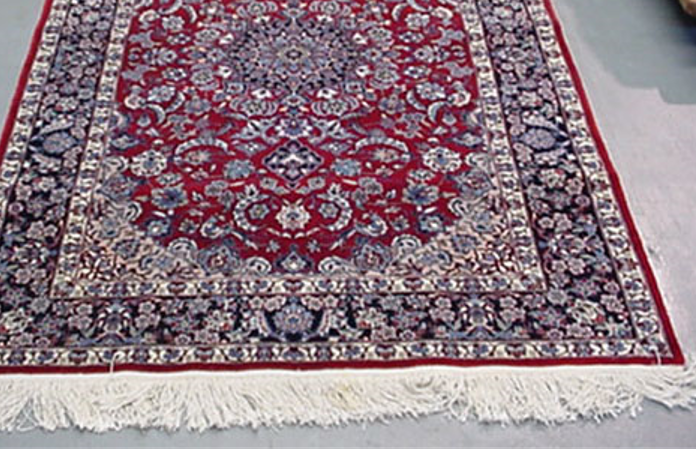
Absolutely! An area rug can change the appearance of the flooring underneath it, and in some cases, it can actually damage the floor.
After 56 years in the carpet and upholstery cleaning business, I’ve seen a number of situations where homeowners move an area rug only to discover discoloration, staining, or damage to the hardwood floor beneath it.
There are several reasons this can happen, and the type of rug backing, the flooring itself, sunlight exposure, and even the way the rug is cleaned can all play a role.
Let’s look at some of the things homeowners should know.
1. What Happens When You Place an Area Rug Directly on a Hardwood Floor?
Let’s start with a fairly common situation: an area rug placed directly on a hardwood floor without a rug pad.
If the rug has a natural-fiber backing, such as cotton or wool, it will generally allow some air circulation between the rug and the floor.
However, there is another factor that homeowners often overlook: sunlight.
An area rug blocks sunlight from reaching the floor underneath it. Over time, the exposed portions of the hardwood floor can change color from exposure to sunlight, while the portion protected by the rug changes at a different rate.
Depending on the wood species and the finish, sunlight can either lighten or darken the exposed flooring.
Eventually, when you move the rug, you may discover a noticeable difference in the appearance of the floor. The portion that was covered by the rug may look considerably different from the surrounding floor.
This doesn’t necessarily mean the rug damaged the floor. It may simply be the result of the flooring aging differently because one portion was protected from sunlight.
2. What If the Area Rug Has a Latex Backing?
This is a different situation.
Some area rugs have a latex backing, which can restrict air circulation between the rug and the hardwood floor.
Depending on the type of latex and the floor finish, there can also be chemical reactions that cause discoloration, sticky residue, or other damage to the flooring.
Moisture trapped between the rug and the floor can create additional problems.
In this situation, the homeowner may eventually discover that the flooring underneath the rug has a different appearance from the surrounding floor, and the difference may be more than simply a variation in color caused by sunlight.
3. What If You Need a Rug Pad to Prevent Slipping?
Smaller area rugs often need some type of non-slip backing or rug pad to keep them from sliding around.
Unfortunately, not all rug pads are suitable for all types of hardwood flooring.
Some solid rubber or latex-backed pads can restrict airflow and may react with certain floor finishes.
One alternative worth considering is an open-weave, waffle-style non-slip rug pad.
These inexpensive pads have an open construction that allows air to circulate underneath the rug while helping keep it in place.
Just make sure the pad is specifically compatible with your type of flooring and its finish.
4. Can Cleaning an Area Rug in Your Home Damage the Hardwood Floor?
This is something I believe homeowners should pay particular attention to.
When it comes time to have an area rug professionally cleaned, it is important to understand that the cleaning process itself can potentially create problems for the flooring underneath.
Many professional carpet cleaners use hot water extraction when cleaning rugs in the home. This process involves applying cleaning solution and water to the rug, followed by extracting the moisture.
When cleaning an area rug that is sitting directly on a hardwood floor, the operator needs to be particularly careful about how much moisture is introduced.
Using excessive water pressure can force moisture deeper into the rug fibers and backing, potentially allowing it to reach the hardwood floor underneath.
The amount of moisture used and how effectively it is extracted are important considerations.
Another factor worth mentioning is the type of finish on your hardwood floor.
Years ago, many wood floors were finished with solvent-based polyurethane. Today, many floors use water-based finishes.
Modern water-based finishes can be very durable, but their resistance to moisture varies. Prolonged exposure to moisture can affect either type of finish.
This is why I believe the cleaning professional needs to understand not only how to clean the rug but also how to protect the flooring underneath it.
5. What About Pet Stains?
Pet accidents are another situation where area rugs can cause problems for hardwood floors.
When a dog or cat urinates on an area rug, the urine can penetrate through the rug fibers and backing and eventually reach the rug pad and the hardwood floor underneath.
Over time, this can cause discoloration, staining, odors, and damage to the floor finish.
I’ve also seen situations where cleaning companies go overboard trying to remove pet stains.
Some companies use specialized extraction tools, such as a Water Claw, to flush and extract contamination from carpeting.
While these tools can be useful when properly operated, excessive flushing or introducing too much moisture can saturate the rug, its backing, and any padding underneath.
If the rug is sitting directly on a hardwood floor, there is always a concern that excessive moisture can reach the flooring and cause damage.
Removing pet contamination is important, but it should never come at the expense of damaging the floor underneath.
6. Choosing the Right Professional Rug Cleaning Company
When it comes time to have your area rug professionally cleaned, I recommend making sure the company you hire has the capability to clean rugs both in your home and at its own facility.
There is an important distinction between a company that primarily cleans wall-to-wall carpeting in homes and a company that also has the equipment and facilities to perform in-plant area rug cleaning.
Many carpet cleaning companies are small owner-operated businesses that operate out of their homes. While many of these companies may do an excellent job cleaning wall-to-wall carpeting, they may not have a separate facility equipped to handle more extensive area rug cleaning.
As a result, their only option may be to clean the rug in your home.
Even when a particular rug would be better suited for in-plant cleaning, they may recommend cleaning it right where it sits simply because they don’t have another option.
I believe homeowners should be cautious about this.
The cleaning method should be determined by the construction and condition of the rug, the type of soiling, and the flooring underneath it—not simply by the equipment or facilities available to the cleaning company.
Some rugs can be safely cleaned in the home. Others, particularly heavily soiled rugs or those with pet contamination, may require a more extensive cleaning process that is better performed at a properly equipped cleaning facility.
Having that option gives the cleaning professional more flexibility to choose the appropriate cleaning method without unnecessarily exposing your hardwood floors to moisture.
At Alec’s Carpet & Upholstery Cleaning, we offer both in-home and in-plant area rug cleaning, allowing us to determine which approach is most appropriate for the rug.
You can learn more about our Professional Oriental Rug Cleaning in Our Plant.
7. What Can You Do to Help Protect Your Hardwood Floors?
Here are a few things I recommend homeowners consider:
- If possible, avoid placing area rugs in rooms that receive substantial direct sunlight, particularly if you want to minimize differences in floor color over time.
- Consider area rugs with natural cotton or wool backings rather than latex-backed rugs.
- If you need a non-slip rug pad, choose an open-weave pad that is approved for your particular flooring.
- Periodically move your rugs, when practical, to check the condition of the flooring underneath.
- Be careful when having area rugs cleaned in the home. Make sure the cleaning company understands how to control moisture and protect the floor.
- If you have pets, address accidents promptly before urine has an opportunity to penetrate the rug and reach the flooring underneath.
A Final Thought From Alec
An area rug can be a beautiful addition to any room, but homeowners should understand that the rug itself, its backing, the pad underneath it, and even the way it is cleaned can all affect the floor beneath it.
In some situations, the damage or discoloration may be permanent.
I’ve seen homeowners discover that the only practical solution is to refinish the hardwood floor or purchase another area rug large enough to cover the portion of the floor that has changed in appearance.
After 56 years in this business, my advice is simple: Don’t wait until you move your area rug to find out that something has happened to the floor underneath it.
A little prevention and choosing the right cleaning professional can save you considerable expense and aggravation later on.
— Alec Houle
Alec’s Carpet & Upholstery Cleaning LLC
Abington, Massachusetts
Professional Carpet, Upholstery & Area Rug Cleaning Since 1970