



A question I hear from time to time is: “Why does my carpet feel stiff after it has been professionally cleaned?”
There isn’t always one simple answer.
A carpet or area rug can feel stiff after cleaning for several different reasons. Sometimes it has to do with how much soil was in the carpet to begin with. Sometimes it is related to the cleaning method, the water used, or the way the carpet dries.
After more than 56 years of cleaning carpets, upholstery and area rugs, I’ve learned that understanding what happens during and after cleaning is just as important as the cleaning itself.
Here are some of the reasons a carpet or rug may feel stiff after cleaning.
First, How Dirty Was the Carpet?
This is one of the first questions I would ask.
Even the best carpet cleaning equipment and the best carpet cleaner can only remove so much soil from a carpet. If a carpet has been neglected for years, hasn’t been vacuumed properly, hasn’t been professionally cleaned periodically, or has simply been exposed to an unusually heavy amount of soil, you can’t expect it to respond exactly like a carpet that has been properly maintained all along.
Regular vacuuming and periodic professional cleaning are important because they prevent soil from becoming so deeply embedded in the carpet fibers.
A carpet that has been neglected may still be dramatically cleaner after professional cleaning, but that doesn’t necessarily mean every bit of soil and residue has been removed.
And when some of that soil remains in the carpet, it can contribute to a stiff or less-than-soft feel.
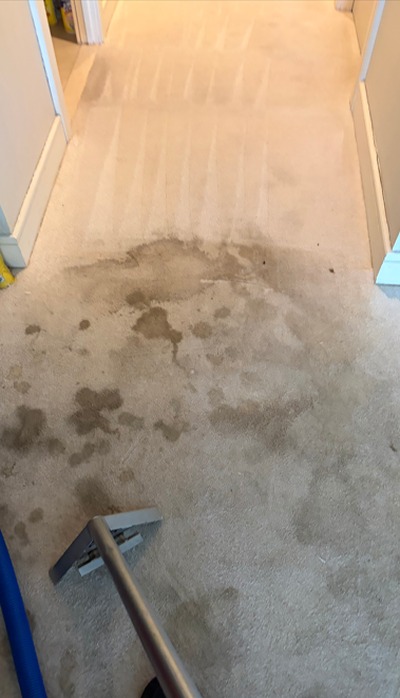
Excessive Spills Can Create the Same Problem
It isn’t always years of neglect that causes the problem.
I’ve cleaned carpets that had an extraordinary number of spills. When enough food, beverages, grease, and other substances are repeatedly spilled onto a carpet, those substances can build up in the fibers and backing.
I remember cleaning a carpet every year at the Harvard Club in Cambridge. There was a lounge and television room that could seat perhaps 20 people. The carpet had been subjected to an incredible number of spills over the years.
I remember thinking that there could easily have been thousands of individual spills on that carpet.
After going over the carpet several times, I realized I had to change my goal. It wasn’t realistic to say, “I’m going to make this carpet perfectly clean.”
Instead, my goal became:
Let’s get the carpet clean enough that your shoes don’t stick to it when you walk across the room.
That may sound humorous, but it illustrates an important point. The condition of the carpet before cleaning has a tremendous effect on the results you can ultimately achieve.
You can’t skip routine maintenance for years and then expect one cleaning to produce the same result as a carpet that has been regularly vacuumed and professionally cleaned.
The Cleaning Method Can Make a Difference
Another factor is how the carpet was cleaned.
Over the years, the carpet-cleaning industry has used many different cleaning methods. Some methods are designed for deep cleaning, while others are primarily intended for maintenance between deeper cleanings.
For many years, I also maintained the carpets and upholstery at the Four Seasons Hotel in Boston.
During the hotel’s slower season, we would steam clean the hallways on the floors where the guest rooms were located. We would clean one floor per night. The hotel wouldn’t rent the rooms on that floor while we were working because of the noise and because the carpets would remain damp for several hours.
But the hotel also needed a way to maintain those carpets between the deeper cleanings.
Every three or four months, we would perform what was commonly called a bonnet cleaning.
A small amount of water and detergent was sprayed onto a section of carpet. Then a 175-rpm rotary machine was used with a bonnet pad. As the pad rotated across the carpet, friction generated heat, while the fibers in the bonnet absorbed moisture and loosened surface soil.
This method was useful because it was relatively quiet and the carpets dried extremely quickly.
But there was an important difference between this type of cleaning and a thorough extraction cleaning:
There was no final rinsing of the carpet.
The cleaning solution and loosened soil were absorbed into the bonnet, but some cleaning solution could remain on the carpet fibers.
That residual material could contribute to a stiff feeling after the carpet dried.
The bonnet system wasn’t necessarily a “bad” cleaning method. It was being used for a particular purpose: fast, quiet maintenance cleaning between deeper cleanings.
That’s an important distinction.
What About Carpet Shampoo?
Years ago, shampooing carpets was another common cleaning method.
The idea was to apply a high-foaming detergent, work it into the carpet, and suspend the soil in the shampoo. A wet vacuum was then used to remove the suspended soil and as much of the shampoo as possible.
The problem was that some shampoo could remain behind.
And when that happened, the carpet could become sticky and attract soil more quickly.
I remember hearing manufacturers explain that their shampoo would dry into crystals and that subsequent vacuuming would remove those crystals.
I decided to test that theory myself.
I mixed the shampoo according to the manufacturer’s directions and put some of it on a mirror. I allowed the water to evaporate, leaving only the dried residue.
If it really dried into harmless crystals, I expected it to feel dry and powdery.
It didn’t.
It felt sticky to me.
That little experiment reinforced something I had already learned through experience: what a manufacturer says a product will do and what actually happens in the field aren’t always exactly the same thing.
Why Hot-Water Extraction Is So Common Today
Today, the vast majority of professional carpet cleaners use some form of hot-water extraction, either with a truck-mounted system or a portable machine.
Both can do an excellent job.
One of the advantages of extraction cleaning is that the cleaning solution and loosened soil can be removed from the carpet rather than simply being left behind.
But the cleaning process is not just about applying cleaning solution.
The rinsing and extraction are important too.
The goal is to remove as much of the loosened soil and cleaning solution as practical so that there is minimal unnecessary residue left behind.
If too much cleaning solution is used, or if the carpet isn’t adequately rinsed and extracted, residue can remain on the fibers and contribute to a stiff or sticky feel.
Don’t Forget About the Water
There’s another factor that many people don’t consider:
The water itself.
Hard water contains dissolved minerals. Those minerals can remain behind as the water evaporates and, under the right circumstances, contribute to a less-soft feel in the carpet.
At a customer’s home, I have no control over the water coming out of their faucet.
But at our shop, where we clean area rugs and outdoor cushions, we do.
We use a water softener so that the water used for cleaning and rinsing has the minerals removed.
That’s one small part of our process, but when you’re trying to produce the best possible result, small details can matter.
Sometimes It’s Simply the Way the Carpet Dries
Here’s another reason that may surprise you:
Sometimes the carpet feels different simply because it has been air dried.
Think about two cotton towels.
Wash both of them.
Put one in a clothes dryer and allow it to tumble dry.
Hang the other one on a clothesline and let it air dry.
When they’re both completely dry, pick them up.
You’ll immediately notice a difference.
The same basic principle can apply to carpet.
Area rugs that we clean at our shop can be hung or positioned so that we can move air across them. We can also use controlled heat to help with the drying process. Once they’re completely dry, we post-vacuum the rugs.
That final vacuuming helps restore the feel of the fibers.
Wall-to-wall carpet in a home is different. Once we’ve cleaned it, it generally has to dry in place.
There isn’t a clothes dryer for your living room carpet.
So even when everything has been done correctly—the appropriate cleaning method was used, the carpet was thoroughly rinsed and extracted, and excessive residue wasn’t left behind—the carpet can sometimes feel a little different while it is drying.
So, Does Stiff Carpet Mean It Wasn’t Cleaned Properly?
Not necessarily.
A stiff feeling after cleaning can have several causes.
It could be:
- Heavy soil that couldn’t all be removed in one cleaning
- Old spills or sticky substances remaining in the carpet
- Residue from a previous cleaning
- Residue from the current cleaning process
- The particular cleaning method that was used
- Minerals from hard water
- Or simply the way the carpet dried
That’s why I don’t think it’s fair to look at a carpet immediately after cleaning, feel a little stiffness, and automatically conclude that something went wrong.
Give the carpet time to dry completely.
Then vacuum it thoroughly.
Often, you’ll find that the carpet feels considerably softer after it has completely dried and received a few good vacuumings.
The Bottom Line
Professional carpet cleaning isn’t magic.
A professional cleaner can remove an enormous amount of soil from a carpet, but the condition of the carpet before cleaning, the cleaning method, the water, the amount of residue, and even the drying process can all affect how the carpet feels afterward.
That’s also why I believe regular maintenance matters.
Vacuuming regularly and having your carpet professionally cleaned before soil and spills have had years to build up gives a cleaner a much better starting point.
And if your carpet feels a little stiff after cleaning, don’t automatically assume that it wasn’t cleaned properly.
Sometimes the explanation is simply what happened before the cleaning—or what happens while the carpet is drying afterward.
After 56 years in this business, I’ve learned that the more you understand about carpet, the easier it is to understand why there isn’t always a one-size-fits-all answer.
A question I hear from time to time is: “Why does my carpet feel stiff after it has been professionally cleaned?”
There isn’t always one simple answer.
A carpet or area rug can feel stiff after cleaning for several different reasons. Sometimes it has to do with how much soil was in the carpet to begin with. Sometimes it is related to the cleaning method, the water used, or the way the carpet dries.
After more than 56 years of cleaning carpets, upholstery and area rugs, I’ve learned that understanding what happens during and after cleaning is just as important as the cleaning itself.
Here are some of the reasons a carpet or rug may feel stiff after cleaning.
First, How Dirty Was the Carpet?
This is one of the first questions I would ask.
Even the best carpet cleaning equipment and the best carpet cleaner can only remove so much soil from a carpet. If a carpet has been neglected for years, hasn’t been vacuumed properly, hasn’t been professionally cleaned periodically, or has simply been exposed to an unusually heavy amount of soil, you can’t expect it to respond exactly like a carpet that has been properly maintained all along.
Regular vacuuming and periodic professional cleaning are important because they prevent soil from becoming so deeply embedded in the carpet fibers.
A carpet that has been neglected may still be dramatically cleaner after professional cleaning, but that doesn’t necessarily mean every bit of soil and residue has been removed.
And when some of that soil remains in the carpet, it can contribute to a stiff or less-than-soft feel.
Excessive Spills Can Create the Same Problem
It isn’t always years of neglect that causes the problem.
I’ve cleaned carpets that had an extraordinary number of spills. When enough food, beverages, grease, and other substances are repeatedly spilled onto a carpet, those substances can build up in the fibers and backing.
I remember cleaning a carpet every year at the Harvard Club in Cambridge. There was a lounge and television room that could seat perhaps 20 people. The carpet had been subjected to an incredible number of spills over the years.
I remember thinking that there could easily have been thousands of individual spills on that carpet.
After going over the carpet several times, I realized I had to change my goal. It wasn’t realistic to say, “I’m going to make this carpet perfectly clean.”
Instead, my goal became:
Let’s get the carpet clean enough that your shoes don’t stick to it when you walk across the room.
That may sound humorous, but it illustrates an important point. The condition of the carpet before cleaning has a tremendous effect on the results you can ultimately achieve.
You can’t skip routine maintenance for years and then expect one cleaning to produce the same result as a carpet that has been regularly vacuumed and professionally cleaned.
The Cleaning Method Can Make a Difference
Another factor is how the carpet was cleaned.
Over the years, the carpet-cleaning industry has used many different cleaning methods. Some methods are designed for deep cleaning, while others are primarily intended for maintenance between deeper cleanings.
For many years, I also maintained the carpets and upholstery at the Four Seasons Hotel in Boston.
During the hotel’s slower season, we would steam clean the hallways on the floors where the guest rooms were located. We would clean one floor per night. The hotel wouldn’t rent the rooms on that floor while we were working because of the noise and because the carpets would remain damp for several hours.
But the hotel also needed a way to maintain those carpets between the deeper cleanings.
Every three or four months, we would perform what was commonly called a bonnet cleaning.
A small amount of water and detergent was sprayed onto a section of carpet. Then a 175-rpm rotary machine was used with a bonnet pad. As the pad rotated across the carpet, friction generated heat, while the fibers in the bonnet absorbed moisture and loosened surface soil.
This method was useful because it was relatively quiet and the carpets dried extremely quickly.
But there was an important difference between this type of cleaning and a thorough extraction cleaning:
There was no final rinsing of the carpet.
The cleaning solution and loosened soil were absorbed into the bonnet, but some cleaning solution could remain on the carpet fibers.
That residual material could contribute to a stiff feeling after the carpet dried.
The bonnet system wasn’t necessarily a “bad” cleaning method. It was being used for a particular purpose: fast, quiet maintenance cleaning between deeper cleanings.
That’s an important distinction.
What About Carpet Shampoo?
Years ago, shampooing carpets was another common cleaning method.
The idea was to apply a high-foaming detergent, work it into the carpet, and suspend the soil in the shampoo. A wet vacuum was then used to remove the suspended soil and as much of the shampoo as possible.
The problem was that some shampoo could remain behind.
And when that happened, the carpet could become sticky and attract soil more quickly.
I remember hearing manufacturers explain that their shampoo would dry into crystals and that subsequent vacuuming would remove those crystals.
I decided to test that theory myself.
I mixed the shampoo according to the manufacturer’s directions and put some of it on a mirror. I allowed the water to evaporate, leaving only the dried residue.
If it really dried into harmless crystals, I expected it to feel dry and powdery.
It didn’t.
It felt sticky to me.
That little experiment reinforced something I had already learned through experience: what a manufacturer says a product will do and what actually happens in the field aren’t always exactly the same thing.
Why Hot-Water Extraction Is So Common Today
Today, the vast majority of professional carpet cleaners use some form of hot-water extraction, either with a truck-mounted system or a portable machine.
Both can do an excellent job.
One of the advantages of extraction cleaning is that the cleaning solution and loosened soil can be removed from the carpet rather than simply being left behind.
But the cleaning process is not just about applying cleaning solution.
The rinsing and extraction are important too.
The goal is to remove as much of the loosened soil and cleaning solution as practical so that there is minimal unnecessary residue left behind.
If too much cleaning solution is used, or if the carpet isn’t adequately rinsed and extracted, residue can remain on the fibers and contribute to a stiff or sticky feel.
Don’t Forget About the Water
There’s another factor that many people don’t consider:
The water itself.
Hard water contains dissolved minerals. Those minerals can remain behind as the water evaporates and, under the right circumstances, contribute to a less-soft feel in the carpet.
At a customer’s home, I have no control over the water coming out of their faucet.
But at our shop, where we clean area rugs and outdoor cushions, we do.
We use a water softener so that the water used for cleaning and rinsing has the minerals removed.
That’s one small part of our process, but when you’re trying to produce the best possible result, small details can matter.
Sometimes It’s Simply the Way the Carpet Dries
Here’s another reason that may surprise you:
Sometimes the carpet feels different simply because it has been air dried.
Think about two cotton towels.
Wash both of them.
Put one in a clothes dryer and allow it to tumble dry.
Hang the other one on a clothesline and let it air dry.
When they’re both completely dry, pick them up.
You’ll immediately notice a difference.
The same basic principle can apply to carpet.
Area rugs that we clean at our shop can be hung or positioned so that we can move air across them. We can also use controlled heat to help with the drying process. Once they’re completely dry, we post-vacuum the rugs.
That final vacuuming helps restore the feel of the fibers.
Wall-to-wall carpet in a home is different. Once we’ve cleaned it, it generally has to dry in place.
There isn’t a clothes dryer for your living room carpet.
So even when everything has been done correctly—the appropriate cleaning method was used, the carpet was thoroughly rinsed and extracted, and excessive residue wasn’t left behind—the carpet can sometimes feel a little different while it is drying.
So, Does Stiff Carpet Mean It Wasn’t Cleaned Properly?
Not necessarily.
A stiff feeling after cleaning can have several causes.
It could be:
- Heavy soil that couldn’t all be removed in one cleaning
- Old spills or sticky substances remaining in the carpet
- Residue from a previous cleaning
- Residue from the current cleaning process
- The particular cleaning method that was used
- Minerals from hard water
- Or simply the way the carpet dried
That’s why I don’t think it’s fair to look at a carpet immediately after cleaning, feel a little stiffness, and automatically conclude that something went wrong.
Give the carpet time to dry completely.
Then vacuum it thoroughly.
Often, you’ll find that the carpet feels considerably softer after it has completely dried and received a few good vacuumings.
The Bottom Line
Professional carpet cleaning isn’t magic.
A professional cleaner can remove an enormous amount of soil from a carpet, but the condition of the carpet before cleaning, the cleaning method, the water, the amount of residue, and even the drying process can all affect how the carpet feels afterward.
That’s also why I believe regular maintenance matters.
Vacuuming regularly and having your carpet professionally cleaned before soil and spills have had years to build up gives a cleaner a much better starting point.
And if your carpet feels a little stiff after cleaning, don’t automatically assume that it wasn’t cleaned properly.
Sometimes the explanation is simply what happened before the cleaning—or what happens while the carpet is drying afterward.
After 56 years in this business, I’ve learned that the more you understand about carpet, the easier it is to understand why there isn’t always a one-size-fits-all answer.