



When you have your carpets professionally cleaned, most of the dirt and many stains will be removed. But what happens when a stubborn stain remains? And what if you accidentally spill something on your carpet and want to know whether you can remove it yourself?
After more than 56 years in the carpet cleaning business, I’ve learned that different stains often require very different treatments. Professional carpet cleaners have several specialized spotting agents that work through different chemical reactions. Knowing which treatment to use, how to apply it and when to stop is an important part of achieving the best results.
Let me explain a couple of the approaches professionals use to tackle stubborn stains, along with some important things homeowners should understand.
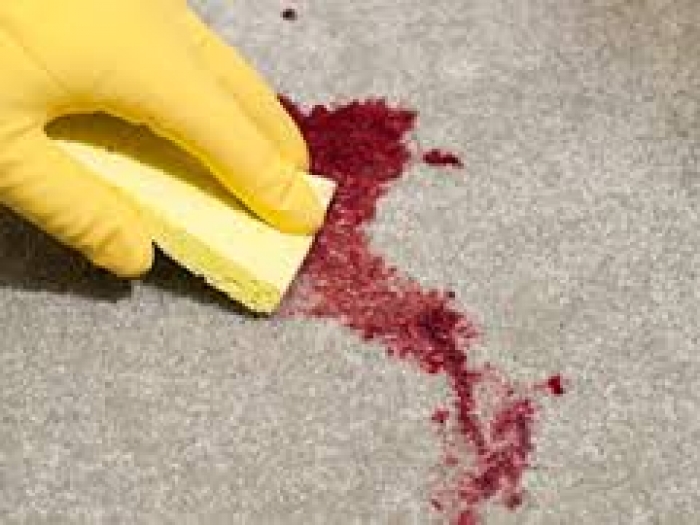
Removing Red Stains from Kool-Aid, Gatorade and Other Soft Drinks
Have you ever spilled a red sports drink, fruit punch or Kool-Aid on your carpet and discovered that ordinary cleaning solutions won’t remove the color?
Many brightly colored soft drinks contain synthetic dyes. These dyes can be particularly difficult to remove from certain carpet fibers, and ordinary cleaning may not be enough to eliminate the discoloration.
For suitable synthetic dye stains, professional carpet cleaners may use a reducing agent. In simple terms, a reducing agent donates electrons to the dye molecule, changing its chemical structure and often reducing or eliminating its visible color.
Some professional red-dye treatments use a two-part formulation, with a reducing agent and an alkaline activator. The exact chemistry depends on the product being used.
Professionals may also use carefully controlled heat to accelerate certain treatments. However, this requires the right product, suitable carpet fibers and careful control of temperature. Excessive heat can permanently damage carpet fibers or alter the carpet’s original dye.
This is one reason I don’t recommend that homeowners experiment with an ordinary household iron and chemicals on a carpet stain. A technique that works in experienced hands can produce a much bigger problem when the wrong conditions or products are used.
The important lesson is that some stubborn red stains require a specialized chemical treatment rather than simply more detergent or more scrubbing.
Removing Coffee, Wine and Other Stains with Hydrogen Peroxide
Now let’s consider another category of stains.
Coffee, tea, wine and certain other food and beverage stains contain colored compounds that may respond to oxidation. Blood and urine, however, contain additional components and may require different treatments depending on the circumstances.
One chemical professionals use for suitable stains is hydrogen peroxide, an oxidizing agent.
Unlike a reducing agent, which donates electrons, an oxidizing agent accepts electrons from another substance. This reaction can alter the structure of certain colored compounds, making them less visible.
Hydrogen peroxide is available in different concentrations. Generally, stronger solutions can react more aggressively, but they can also increase the risk of removing the carpet’s original color or damaging sensitive fibers.
My philosophy has always been to take my time and use the mildest treatment likely to achieve the desired result. I would rather make gradual progress than remove the stain and discover that I’ve also lightened the carpet.
I always keep one principle in mind: let’s solve the original problem without creating a new one.
Why Careful Application Matters
One of the most important things I’ve learned over the years is that applying a stain treatment is not quite as simple as it might seem.
Think about placing a drop of water on a paper towel. The water spreads beyond the point where you initially placed it. Liquids applied to carpet can spread in a similar way, depending on the amount used and the carpet’s construction.
When treating a stain, you want to address the affected area without unnecessarily exposing the surrounding carpet to a bleaching agent.
For certain compatible carpets and stains, ordinary 3% hydrogen peroxide may be appropriate, provided the carpet manufacturer’s guidance permits it and a hidden-area test confirms that the color remains stable. Even then, the result is not guaranteed.
A small cotton swab may help control application on a very small spot, while a clean white cotton pad may be more practical for a larger area. The goal is to avoid saturating the carpet or spreading the treatment beyond the stain.
Never assume that a treatment suitable for one carpet is safe for another. Wool, other natural fibers, delicate area rugs and carpets with unstable dyes require particular caution.
Hydrogen peroxide can also take time to work. Rather than continually adding more product, allow the treatment to work according to its directions and reassess the result before deciding whether another application is appropriate.
If the stain gradually lightens, patience may be worthwhile. But if the carpet itself begins to lose color, stop. At that point, you may be creating permanent discoloration rather than removing the original stain.
Also, never mix hydrogen peroxide with ammonia or other cleaning chemicals. Avoid applying a new chemical treatment over a previous product unless the manufacturer’s instructions specifically explain how to prepare the area safely.
What Do I Do When a Stain Remains After Professional Cleaning?
Sometimes, I clean a carpet and discover that a particular stain has resisted the normal cleaning process. That doesn’t necessarily mean nothing more can be done.
For certain stains, I may use a specialized professional product containing hydrogen peroxide, formulated for carpet spotting and designed to help the treatment penetrate the stain.
These products can sometimes produce results much faster than a mild treatment. However, the right choice depends on the type of stain, the carpet fiber, the original dye and the product’s instructions.
If additional treatment is appropriate, I explain the available options to the customer. Depending on the situation, I may offer to return and treat the remaining stain for an additional charge.
Alternatively, for a suitable stain, I may explain a cautious homeowner treatment that could help resolve the problem without the need for another service visit.
I believe customers should understand their options and make an informed decision.
You can learn more about our professional carpet cleaning services and what to expect from a professional cleaning.
Can Professionals Make Stain Removal Happen Faster?
Yes, in certain circumstances.
Experienced carpet cleaners have additional techniques and specialized products that can accelerate particular stain-removal reactions. Depending on the stain and treatment, professionals may use controlled heat, ultraviolet light or other methods to help speed up the process.
But faster is not always better.
Increasing the chemical strength, adding heat or combining treatments can introduce risks. A treatment that removes the stain quickly may also remove the carpet’s original color, damage the fibers or affect the carpet’s appearance.
This is why experience matters. The challenge isn’t simply to make the stain disappear. It is to remove as much of the unwanted discoloration as possible while preserving the carpet.
My Advice: Patience Can Save Your Carpet
After more than 56 years of cleaning carpets and dealing with stubborn stains, I’ve learned that knowing when to proceed slowly is just as important as knowing which product to use.
If you spill something on your carpet, blot up as much of the liquid as possible with a clean, white absorbent cloth. Don’t scrub, and avoid experimenting with several different cleaning products.
For a stubborn stain, the correct treatment depends on what caused it and what the carpet is made of. If you aren’t sure, it’s better to ask a professional before trying a chemical treatment that could permanently change the carpet’s color.
Some stains can be removed completely. Others can only be improved, and some have permanently altered the carpet dye.
My approach has always been straightforward: use the right treatment, take your time and don’t risk damaging the carpet just to make a stain disappear faster.
More Carpet and Upholstery Care Advice from Ask Alec
Have questions about carpet stains, upholstery cleaning, area rugs or caring for your home’s fabrics? Visit my Ask Alec advice page to explore more articles based on my experience in the carpet and upholstery cleaning industry.
I’ve put together these articles to share practical advice, answer common questions and help homeowners make informed decisions about caring for their carpets, furniture and fine rugs.
For another perspective on stain removal, you can also read our article about carpet stain removal.
Have a Question About a Stubborn Carpet Stain?
If you have a question about a stubborn carpet stain or would like advice on how to deal with a particular spot, please feel free to contact us. After more than 56 years in the carpet cleaning business, I’m always happy to share my experience and help you determine the best approach.
Call Alec’s Carpet & Upholstery Cleaning LLC at 781-871-1415 or visit our Contact Us page to get in touch.
We’ve been serving customers throughout Greater Boston, the South Shore and Cape Cod since 1970, and we’re always happy to help.
— Alec Houle
Alec’s Carpet & Upholstery Cleaning LLC
Serving Greater Boston, the South Shore and Cape Cod since 1970.