



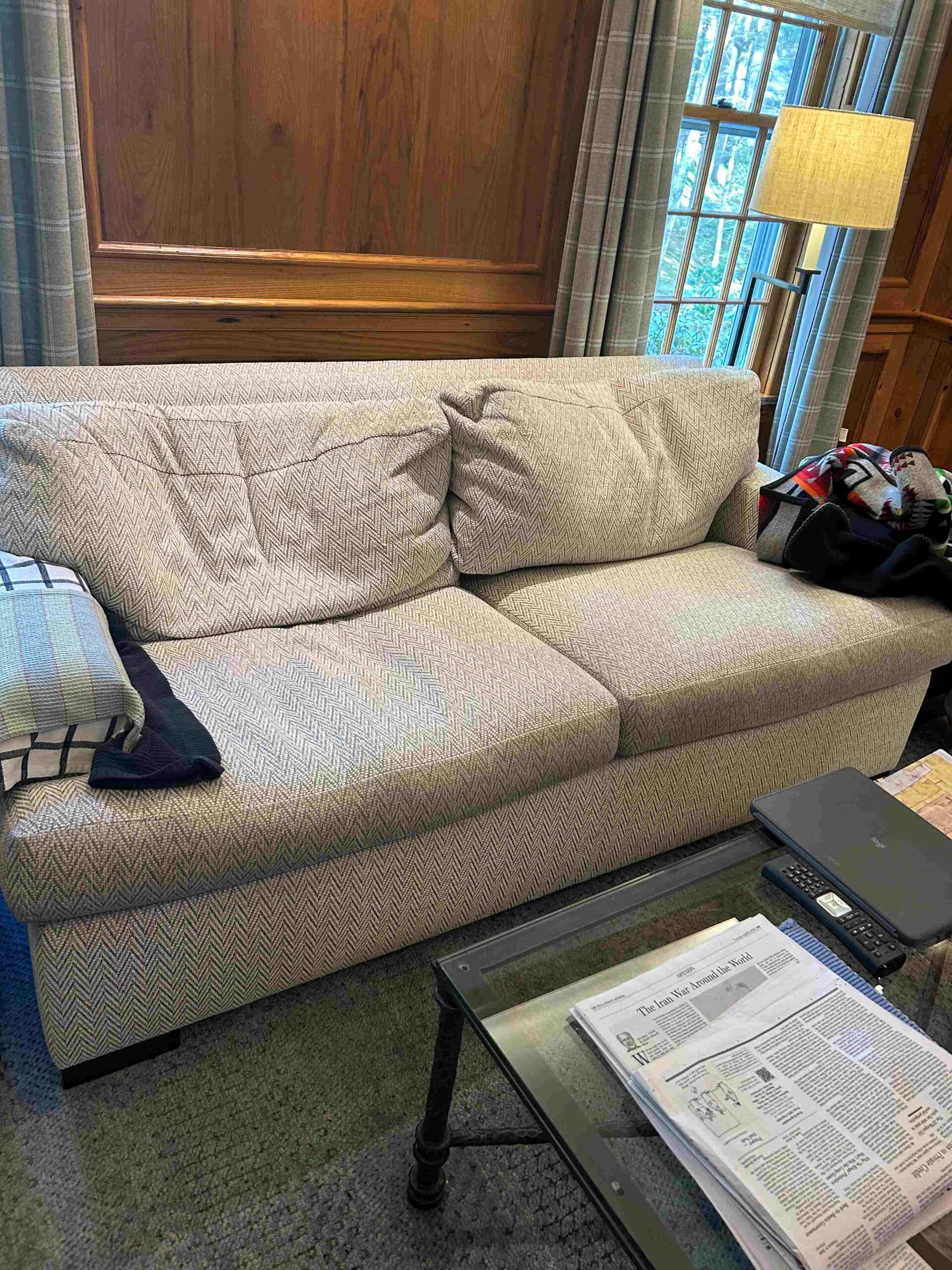
Professional Upholstery Cleaning for Braintree Homes
I’ve been professionally cleaning upholstery since 1962 and started Alec’s Carpet & Upholstery Cleaning in 1970.
After more than 60 years in the business, I’ve learned that good upholstery cleaning isn’t simply about removing dirt. It’s about understanding the fabric and knowing what is safest and most appropriate for it.
Upholstered furniture can quietly accumulate years of body oils, dust, pollen, pet dander, food particles, and everyday household soil.
Sofas, sectionals, chairs, dining chairs, ottomans, and upholstered headboards can receive considerable use before they actually look dirty.
Regular vacuuming helps, but it cannot remove everything.
Professional upholstery cleaning can help remove accumulated soil while helping preserve the appearance, texture, and condition of your furniture.
And after more than 60 years of doing this, I’ve learned something particularly important:
Not every piece of furniture should be cleaned the same way.
A cotton sofa is different from a velvet chair. Linen is different from wool. Chenille, microfiber, rayon, silk blends, and performance fabrics can all react differently to moisture and cleaning chemistry.
The fabric determines the cleaning method—not the other way around.
Upholstery Cleaning for Braintree Homes
Braintree has a wide variety of homes, from established residences to newer homes, with upholstered furniture ranging from everyday family-room pieces to fine and designer furnishings.
I regularly clean:
- Sofas
- Sectionals
- Loveseats
- Armchairs
- Recliners
- Dining room chairs
- Kitchen and breakfast-room chairs
- Ottomans
- Benches
- Upholstered headboards
- Window seats
- Custom furniture
- Designer furniture
I also work with many different upholstery fabrics, including:
- Cotton
- Linen
- Wool
- Velvet
- Chenille
- Microfiber
- Silk and silk blends
- Rayon and viscose blends
- Performance fabrics
- Synthetic fabrics
- Specialty upholstery materials
Every piece is evaluated individually before cleaning.
Why Upholstery Cleaning Requires Experience
Upholstery is more complicated than simply putting a cleaning solution on fabric and extracting it.
The fabric may have different fibers, dyes, construction, backing materials, and moisture tolerances.
The furniture underneath the fabric matters too.
Cushion construction, padding, frame materials, and the way the upholstery is attached can all affect how the piece should be cleaned.
Depending on the furniture and fabric, improper cleaning can contribute to:
- Browning
- Shrinkage
- Puckering
- Dye bleeding
- Water marks
- Texture changes
- Slow drying
- Soil wicking
- Sticky residue
- Damage to the fabric or underlying materials
That’s why I don’t believe in a one-size-fits-all upholstery cleaning process.
I look at the furniture first and determine how it should be cleaned.
How I Approach Upholstery Cleaning
Every upholstery-cleaning job begins with an inspection.
1. Inspection and Fabric Evaluation
I examine the fabric, construction, condition, visible spots and stains, areas of wear, and any other conditions that could affect the cleaning.
I also look for potential problems involving dye stability, previous damage, previous cleaning, and moisture sensitivity.
If I see something that concerns me, I’ll discuss it with you before proceeding.
2. Fabric Testing
When appropriate, I test the fabric and dyes before cleaning.
This can help determine whether the proposed cleaning method is appropriate and whether there are concerns involving dye movement or other problems.
A few minutes of evaluation can prevent a much larger problem.
3. Dry Soil Removal
When appropriate, I remove loose dry soil and particulate matter before the main cleaning process begins.
Arms, headrests, seat cushions, and other frequently touched areas can accumulate considerable amounts of fine soil.
4. Treatment of Problem Areas
Arms, headrests, seat cushions, and other frequently used areas often contain more body oils and soil than the rest of the furniture.
Spots and stains are evaluated individually.
Different contaminants can require different treatments.
5. Selecting the Cleaning Method
The cleaning method is selected specifically for the fabric.
Some upholstery can tolerate a more thorough wet cleaning.
Other fabrics require a carefully controlled lower-moisture approach.
More aggressive isn’t necessarily better.
My goal is to clean the furniture as thoroughly and safely as the fabric will allow.
6. Controlled Cleaning
Moisture control is particularly important with upholstery.
I don’t believe that using more water automatically produces better cleaning.
The amount of moisture should be appropriate for the fabric, construction, condition, and cleaning method.
7. Controlled Drying
Proper drying is an important part of professional upholstery cleaning.
The goal is to remove as much moisture as practical and leave the furniture appropriately dry while minimizing problems associated with excessive moisture.
8. Final Inspection
Once the cleaning is complete, I inspect the furniture again.
My goal isn’t simply to make the furniture look cleaner. My goal is to clean it properly while respecting the fabric and the furniture underneath it.
Body Oils and Everyday Upholstery Soil
One of the most common problems I see isn’t a dramatic stain.
It’s accumulated body oil and everyday soil.
The arms of a sofa, the top of a chair, a headrest, and frequently used seat cushions can gradually become darker or dingier as body oils and fine soil accumulate.
This can happen slowly enough that you may not notice it at first.
By the time the difference becomes obvious, the fabric may have considerable soil embedded in it.
I’ve written specifically about unusual upholstery problems in Ask Alec: Every Upholstery Problem Has a Story.
Sometimes an unusual mark isn’t simply a stain. Understanding why something happened can be just as important as deciding how to clean it.
How Often Should Upholstery Be Professionally Cleaned?
There isn’t one schedule that applies to every sofa or chair.
Cleaning frequency depends on:
- How heavily the furniture is used
- Children
- Pets
- Type of fabric
- Color of the fabric
- How frequently people sit on it
- Whether people eat or drink on the furniture
- Amount of dust and soil in the home
Some furniture may benefit from professional cleaning relatively regularly.
Other pieces may go considerably longer between cleanings.
The best time to clean upholstery isn’t necessarily when it looks dirty.
For more information, see Ask Alec: How Often Should Upholstery Be Professionally Cleaned?.
Can You Trust the Cleaning Code on Your Furniture?
You may have noticed a small cleaning-code tag underneath your sofa or chair cushion.
The common codes include:
- W — Water-based cleaning
- S — Solvent-based cleaning
- SW — Water- or solvent-based cleaning
- X — Vacuum only
These codes can provide useful information, but I don’t believe they should be the only factor considered before cleaning an entire piece of furniture.
I’ve written about this in Ask Alec: Can You Trust the Cleaning Codes on Your Upholstery?.
As I explain in that article, the tag is helpful, but it is only one piece of the puzzle. Before cleaning, I still need to consider the actual fabric, dyes, construction, condition, and moisture sensitivity.
The cleaning code is useful information, but it’s only one piece of the puzzle.
How to Clean a Fabric Sofa Without Ruining It
When a sofa gets dirty, it’s tempting to purchase an upholstery-cleaning product and start spraying.
But cleaning an entire sofa is very different from treating a small spot.
The fabric, type of soil, cleaning solution, amount of moisture, and ability to remove that moisture all matter.
I’ve written about this in Ask Alec: How to Clean a Fabric Sofa Without Ruining Your Upholstery.
A heavily soiled sofa, dirty arms, and one isolated spot are three different cleaning situations and may require completely different approaches.
Stain Removal: What You Can Reasonably Expect
There is an important difference between removing soil and removing a stain.
Soil can often be removed through appropriate cleaning.
A stain may have permanently altered the dye or damaged the fabric itself.
That’s why I don’t promise that every stain will disappear.
I evaluate each problem individually and explain what I believe is realistic.
I’d rather give you an honest assessment before cleaning than promise a result the fabric cannot deliver.
If you’ve spilled red wine, coffee, juice, or another substance, timing can also matter.
For more information, see Ask Alec: What Should You Do When You Spill Red Wine on Carpet, Rugs or Upholstery?.
Fine and Delicate Upholstery
Some upholstered furniture is particularly valuable because of its fabric, construction, age, designer, or sentimental importance.
Fine furniture deserves careful attention.
Older pieces can have weakened fabrics or internal materials.
Antique or specialty upholstery may require a different approach from modern performance fabrics.
The more valuable or delicate the furniture, the more important the initial evaluation becomes.
My Background in Cleaning Chemistry
My background in chemistry has been useful throughout my career.
Upholstery cleaning isn’t simply about choosing the strongest cleaning solution.
Different fibers, dyes, soils, and residues can react differently to cleaning chemistry.
Understanding those interactions helps me determine what should—and sometimes shouldn’t—be used on a particular piece.
The strongest cleaning solution isn’t necessarily the best cleaning solution.
My goal is to remove as much soil as the fabric can safely tolerate while helping preserve its appearance, texture, and condition.
Experience Also Means Knowing What Not to Do
After more than 60 years of cleaning upholstery, I’ve learned that experience isn’t simply knowing how to clean something.
Sometimes it’s knowing what not to do.
I’ve seen upholstery damaged by excessive moisture, improper cleaning solutions, aggressive cleaning methods, and attempts to remove stains that weren’t appropriate for the particular fabric.
That’s why I don’t believe in simply applying the same cleaning process to every sofa and chair.
The goal isn’t to clean upholstery as aggressively as possible. The goal is to clean it properly.
Fabric Protection for Braintree Furniture
After cleaning, some upholstery may benefit from professional fabric protection.
A properly selected protector can help slow the absorption of spills and give you more time to blot them before they penetrate the fibers.
Unlike carpeting, upholstery can be particularly difficult to recover once a spill penetrates deeply and changes the fabric’s color. Your protector therefore can have a useful preventive role.
I’ve written about this in Ask Alec: Is Carpet & Upholstery Protector Really Worth It?.
I don’t treat protection as a one-size-fits-all service. The fabric, condition of the furniture, and how it is used should all be considered first.
I recommend protection when I believe it makes sense for the particular piece—not simply because it’s another service I can sell.
Upholstery Cleaning in Your Braintree Home
Most upholstered furniture is best cleaned on site, where I can work with the furniture in its normal setting.
I provide in-home upholstery cleaning for:
- Sofas
- Sectionals
- Chairs
- Dining furniture
- Ottomans
- Upholstered headboards
- Custom furniture
- Fine and designer pieces
Whether you need one sofa cleaned or an entire room of furniture professionally maintained, I bring the same careful attention to fabric safety, soil removal, and proper cleaning.
Why Braintree Homeowners Choose Alec’s
After more than 60 years in the cleaning business, I still believe that experience, careful evaluation, and honest recommendations make a real difference.
When you choose Alec’s Carpet & Upholstery Cleaning, you receive:
- More than 60 years of hands-on professional cleaning experience
- Owner involvement and personal attention
- Careful evaluation of each piece of furniture
- Experience with fine fabrics and specialty upholstery
- Cleaning methods selected for the individual fabric
- My background in chemistry and understanding of cleaning solutions
- Honest recommendations without high-pressure sales
- Careful attention to detail
- Professional in-home service
My goal has never been simply to clean as many pieces of furniture as possible in a day.
My goal is to clean your furniture properly.
Serving Braintree and the South Shore
I provide professional upholstery cleaning throughout Braintree and surrounding South Shore communities.
Whether you have a heavily used family-room sectional, formal living-room furniture, dining chairs, fine designer upholstery, or furniture in a home that sees different levels of seasonal use, I’d be happy to discuss your needs.
Other Professional Cleaning Services in Braintree, MA
In addition to professional upholstery cleaning, I also provide:
Professional Carpet Cleaning in Braintree, MA
Professional Area Rug Cleaning in Braintree, MA
Professional Outdoor Cushion Cleaning
Each service requires a different approach.
Have Questions About Upholstery Cleaning?
That’s one of the reasons I created Ask Alec.
I’ve spent more than six decades answering questions about upholstery, fabrics, stains, cleaning methods, fabric protection, carpets, and area rugs.
If you’re wondering whether a cleaning code can be trusted, whether your sofa needs a complete cleaning, how often upholstery should be cleaned, or whether a particular stain can be removed, you’ll find practical answers in Ask Alec.
My goal is to provide honest information that helps you make an informed decision—even if that decision is that you don’t need professional cleaning yet.
Ready to Discuss Upholstery Cleaning in Braintree?
If your sofa, sectional, chairs, dining furniture, or other upholstered pieces have accumulated years of everyday soil, body oils, spots, or stains, I’d be happy to discuss them with you.
After more than 60 years in the business, I still believe the best approach is to carefully evaluate the particular fabric, answer your questions honestly, and recommend the cleaning process that makes the most sense for that piece of furniture.
Contact our office at 781-871-1415.
I’ll be happy to answer your questions and discuss your upholstery-cleaning needs.