



Careful Cleaning for Fine Fabrics, Designer Furniture & Everyday Upholstery
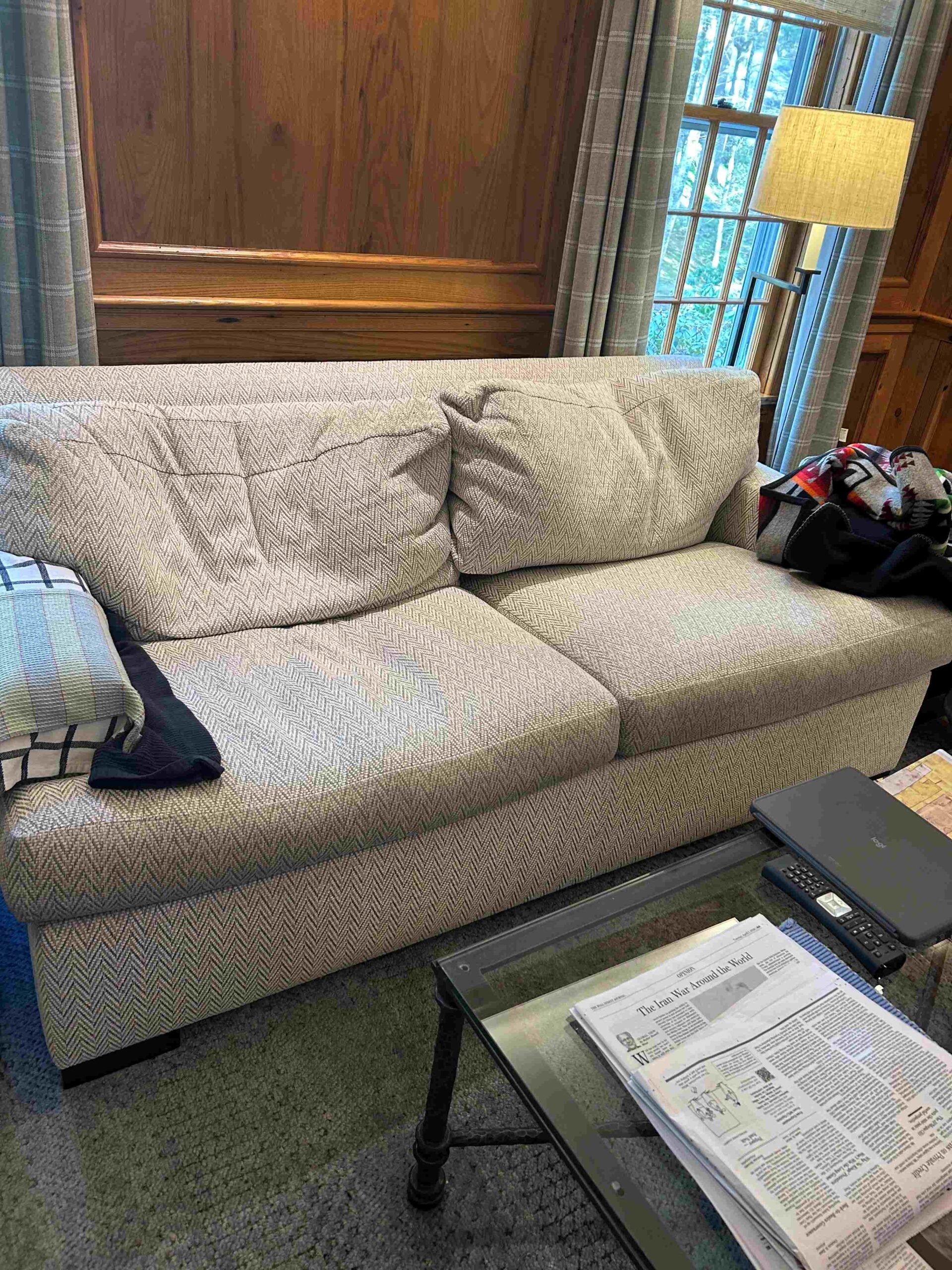
Your upholstered furniture is among the most frequently used—and often most valuable—furnishings in your home.
Over time, sofas, chairs, sectionals, dining chairs and other upholstered pieces can accumulate body oils, dust, food residue, pet hair, and everyday soil that ordinary vacuuming cannot remove. Eventually, that buildup can make furniture look dull, dingy or worn long before the fabric or furniture itself should be considered worn out.
For more than 56 years, I have been professionally cleaning carpets and upholstery. I began cleaning professionally in 1962, and Alec’s Carpet & Upholstery Cleaning has been serving customers since 1970.
One thing has remained consistent throughout those years:
Not every piece of furniture should be cleaned the same way.
A sofa that appears to need nothing more than a routine cleaning may be made from cotton, linen, wool, velvet, rayon, a synthetic blend, or another fabric that requires a very different approach.
The fabric, construction, dyes, condition, previous cleaning, and type of soil all matter.
That is why I carefully evaluate every piece before deciding how it should be cleaned.
Upholstery Cleaning for Needham Homes
Needham has a mix of established neighborhoods, older homes, newer residences and larger custom homes. Areas including Needham Center, Needham Heights, Needham Junction, Upper Falls and Birds Hill all have their own residential character. The Town of Needham also emphasizes the preservation of the town’s historic character and older established neighborhoods. Needham, MA
The upholstered furniture I encounter in Needham homes can be just as varied.
Some customers have everyday family-room furniture that receives heavy use. Others have fine fabric sofas, designer furniture, antique pieces, upholstered dining chairs, sectionals or furniture that has been in the family for many years.
Those situations do not necessarily call for the same cleaning process.
Before I begin, I consider the individual piece and its condition.
Every Piece Receives Individual Attention
One of the most important things I have learned during more than 56 years in the business is that every piece of upholstery has its own characteristics.
Before cleaning begins, I carefully inspect the furniture and consider:
- Fabric type and construction
- Cleaning code
- Fiber content
- Dye stability
- Age and overall condition
- Previous cleaning
- Spots and stains
- Areas of heavy use
- Moisture sensitivity
- Cushion construction
- Decorative trim and details
This evaluation helps me determine what the furniture needs and which cleaning method is appropriate.
Sometimes a piece simply needs a thorough cleaning.
Other times, the evaluation reveals a condition that requires additional caution.
The fabric determines the cleaning method—not the other way around.
Why Careful Evaluation Comes First
Over the years, I have seen what can happen when upholstery is cleaned using a one-size-fits-all process.
Some fabrics can shrink.
Certain dyes can bleed.
Some materials can develop browning or water marks.
Delicate fabrics can be damaged by excessive moisture or inappropriate cleaning chemistry.
And sometimes a previous cleaning has already changed the way the fabric responds to moisture.
That is why I do not believe in simply arriving with one predetermined cleaning process and applying it to every piece of furniture.
In Can You Trust the Cleaning Codes on Your Upholstery?, I explain why the cleaning code is important but should not be the only factor considered before cleaning.
The condition of the fabric and furniture still matters.
Why Professional Upholstery Cleaning Matters
Upholstered furniture collects much more than most people realize.
Body oils, dust, pet dander, food particles and everyday soil gradually work their way into the fabric.
Regular vacuuming can help remove loose surface soil, but it cannot remove everything that becomes embedded in the upholstery.
Professional upholstery cleaning can help:
- Remove accumulated soil
- Improve the appearance of the fabric
- Address many spots and stains
- Remove some accumulated oils and residues
- Freshen frequently used furniture
- Help maintain the appearance and useful life of the upholstery
Professional cleaning is not simply about making furniture look better for a few days.
It is part of maintaining the fabric and the furniture over time.
Understanding Upholstery Cleaning Codes
Many upholstered pieces have cleaning labels showing codes such as W, S, WS or X.
These codes can provide useful information about the manufacturer’s recommended cleaning method, but they are not a substitute for evaluating the actual furniture.
The fabric may have been exposed to spills, previous cleaning, sunlight, wear, body oils or other conditions since it was originally manufactured.
That is why I look at the furniture itself before beginning.
I consider the cleaning code together with the fabric, condition, construction and cleaning history.
As I explain in Can You Trust the Cleaning Codes on Your Upholstery?, the label is an important piece of information, but it is not the entire story.
Moisture Control Is Critical
Upholstery cleaning requires careful control of moisture.
A piece of furniture is more than the fabric you can see.
Beneath the fabric may be foam, batting, padding, wood, springs, adhesives or other materials.
Using excessive moisture can create problems such as prolonged drying, water marks, browning or other changes to the fabric or underlying materials.
That is why I do not believe that putting more water into a piece of furniture automatically produces a better cleaning.
The objective is to remove soil effectively while using an amount of moisture appropriate for that particular fabric and furniture.
Controlled Drying Matters
Cleaning does not end when the extraction is finished.
The furniture also needs to dry properly.
A cushion can feel relatively dry on the surface while moisture remains deeper inside the cushion.
This is particularly important with thick cushions, dense furniture, large sectionals and pieces where air circulation is limited.
I pay attention to the drying process because proper drying is an important part of successful upholstery cleaning.
Why Did Cleaning Leave Water Marks or Rings?
Water marks and rings are among the problems homeowners sometimes discover after upholstery has been cleaned.
There can be several possible explanations.
Moisture may move through the fabric unevenly. Previous spills or residues can become visible when the furniture is cleaned. Existing conditions within the cushion can also affect the appearance.
In Why Did Cleaning Leave Water Marks or Rings on My Upholstery?, I explain why this can happen and why moisture control is so important.
The important thing is to understand what caused the appearance before trying to treat it aggressively.
How to Clean a Fabric Sofa Without Ruining Your Upholstery
Sofas are among the most frequently cleaned pieces of upholstered furniture.
They receive constant contact from people, pets, food, drinks and everyday household activity.
Body oils can accumulate on arms, headrests and other frequently touched areas.
But cleaning a fabric sofa is not simply a matter of saturating it with cleaning solution.
The fabric, construction, cleaning code, cushion materials and overall condition all need to be considered.
I discuss this in How to Clean a Fabric Sofa Without Ruining Your Upholstery.
A careful evaluation before cleaning can help prevent unnecessary problems and establish realistic expectations.
Common Upholstery Problems I Help Address
Needham homeowners contact me about many different upholstery concerns, including:
- Body oil buildup
- Darkened arms and headrests
- Food and beverage spills
- Water marks and rings
- Pet stains and odors
- General dinginess
- Spots and stains
- Soil around cushions
- Fabric discoloration
- Problems resulting from previous cleaning
These problems can have very different causes.
That is why I do not believe every upholstery problem should be treated with the same solution.
As I explain in Every Upholstery Problem Has a Story, what you see on the surface can sometimes provide clues about what has happened to the furniture over time.
Dark Spots on Sofa Arms and Headrests
Arms and headrests are often among the dirtiest areas of an upholstered sofa or chair.
Frequent contact with hands, skin, hair and hair products can result in significant buildup.
Sometimes professional cleaning can make these areas look dramatically better.
In other cases, the dark appearance may involve wear, discoloration or changes to the fabric itself.
I explain this in Why Does My Sofa Have Dark Spots on the Arms and Headrest?.
The important thing is identifying what is causing the darkening before deciding how aggressively it should be treated.
Pet Stains and Odors
Pets can create some of the more challenging upholstery-cleaning situations.
A surface stain may be relatively easy to address, while an odor can be much more complicated when contamination has penetrated into cushions or underlying materials.
The visible spot does not necessarily tell you how far the problem has traveled.
That is why I evaluate pet-related upholstery problems individually and explain what I believe can realistically be accomplished.
I would rather give you an honest assessment than promise that every stain or odor will disappear.
Different Types of Upholstered Furniture
I professionally clean many different types of upholstered furniture, including:
- Sofas
- Loveseats
- Sectionals
- Chairs
- Recliners
- Dining room chairs
- Ottomans
- Benches
- Upholstered headboards
- Other residential upholstered furniture
The construction of the furniture can be just as important as the fabric.
A loose seat cushion may have different cleaning and drying considerations than a tightly upholstered chair.
A large sectional may require a different approach from a dining chair.
Fine Fabrics Require Special Care
Many homes contain upholstered furniture made with fine or delicate fabrics.
These may include natural fibers, wool blends, linen, cotton, velvet, designer fabrics and other specialty materials.
A fabric can appear durable and still have limitations when exposed to particular cleaning chemistry or excessive moisture.
For those pieces, I take a careful approach.
The goal is not simply to remove as much soil as possible.
The goal is to clean the furniture effectively while protecting the fabric and construction whenever reasonably possible.
How Often Should Upholstery Be Professionally Cleaned?
There is no single schedule that applies to every piece of upholstered furniture.
The appropriate frequency depends on how much the furniture is used, the type and color of the fabric, household traffic, pets, children and the amount of soil accumulating on the furniture.
Frequently used sofas and chairs may need professional cleaning more often than furniture in a formal room that is rarely used.
I discuss this in How Often Should Upholstery Be Professionally Cleaned?.
Regular maintenance can help prevent heavy accumulation and keep furniture looking better between professional cleanings.
Fabric Protection for Upholstered Furniture
After furniture has been professionally cleaned, some homeowners choose to have fabric protection applied.
Protection can help make certain fabrics more resistant to future spills and soil, depending on the material and the protector being used.
It does not make upholstery permanently stain-proof, and it does not eliminate the need for future cleaning.
Rather, it can be another part of a sensible upholstery-maintenance program.
I can discuss whether fabric protection is appropriate for your particular furniture after evaluating the material.
What More Than 56 Years of Experience Means
I began cleaning professionally in 1962 and established Alec’s Carpet & Upholstery Cleaning in 1970.
Over more than 56 years, I have worked with a tremendous range of upholstery fabrics, furniture construction, stains, soils and cleaning problems.
That experience has taught me that successful upholstery cleaning is not simply about equipment.
It involves understanding:
- Fabrics
- Dyes
- Construction
- Moisture
- Cleaning chemistry
- Drying
- Stains
- Wear
- Previous cleaning
Experience also teaches you when not to take an aggressive approach.
I do not believe in promising that every stain will disappear or that every piece can be cleaned in exactly the same way.
I would rather explain what I see, answer your questions and recommend the approach I believe is appropriate for your furniture.
Why Needham Homeowners Choose Alec’s Carpet & Upholstery Cleaning
When you choose Alec’s, you receive:
- More than 56 years of professional experience
- A family-owned business established in 1970
- Individual evaluation of every piece
- Experience with fine and delicate upholstery
- Careful attention to moisture and drying
- Experience with sofas, chairs, sectionals and specialty furniture
- Cleaning methods selected for the particular fabric
- Honest recommendations without high-pressure sales
- Personalized service from an experienced professional
- Service throughout Needham and Greater Boston
Proudly Serving Needham Neighborhoods
I provide professional upholstery cleaning throughout Needham, including:
Needham Center
Needham Heights
Needham Junction
Upper Falls
Birds Hill
and surrounding Needham neighborhoods.
Needham’s official planning and historical materials emphasize the town’s distinct neighborhoods and historic character, so using these local references gives the page genuine geographic relevance without repeating “Needham” in every paragraph. Needham, MA
Whether your upholstered furniture is in Needham Center, around the Heights, near Upper Falls, or elsewhere in town, I bring the same careful evaluation and individualized cleaning approach.
Other Professional Cleaning Services for Needham Homes
Upholstered furniture is only one part of the fabric environment in your home.
I also provide:
Professional Carpet Cleaning in Needham, MA
Professional Area Rug Cleaning in Needham, MA
Professional Outdoor Cushion Cleaning in Needham, MA
Each service requires a different approach. Whether you need carpeting professionally cleaned, upholstered furniture cleaned in your home, a fine area rug cleaned at our facility, or outdoor cushions professionally cleaned and prepared for another season, I would be happy to discuss the best approach for your particular needs.
For practical information about upholstery, fabric care, stains and other cleaning questions, visit Ask Alec.
Schedule Professional Upholstery Cleaning in Needham
When your upholstered furniture needs professional cleaning, experience matters.
For more than 56 years, I have worked with homeowners throughout Greater Boston and have learned that successful upholstery cleaning begins by understanding the fabric and furniture before the cleaning process starts.
Whether you need a favorite sofa refreshed, dining chairs cleaned, a sectional professionally maintained, or several pieces cleaned throughout your home, I will carefully evaluate the furniture and recommend the cleaning approach appropriate for it.
For questions or to schedule an appointment, visit our Contact Us page or call (781) 871-1415.
Alec’s Carpet & Upholstery Cleaning
Serving Needham, MA and Greater Boston since 1970.