


Over the years, I have encountered just about every type of household substance imaginable that can end up on carpets, area rugs and upholstered furniture. Some are relatively easy to deal with, while others can become much more challenging if the wrong cleaning approach is used.
Three common problems I have encountered throughout my 56 years in the carpet and upholstery cleaning business are candle wax, children’s slime and ink.
Although these substances may seem like ordinary household messes, each requires a different approach. What works for candle wax may be completely inappropriate for ink, and what works on fresh slime may not work nearly as well once it has hardened.
In this Ask Alec article, I’ll explain how I approach each of these situations, what you can try yourself, and when it is better to leave the job to a professional.
1. How to Remove Candle Wax From Carpet and Upholstery
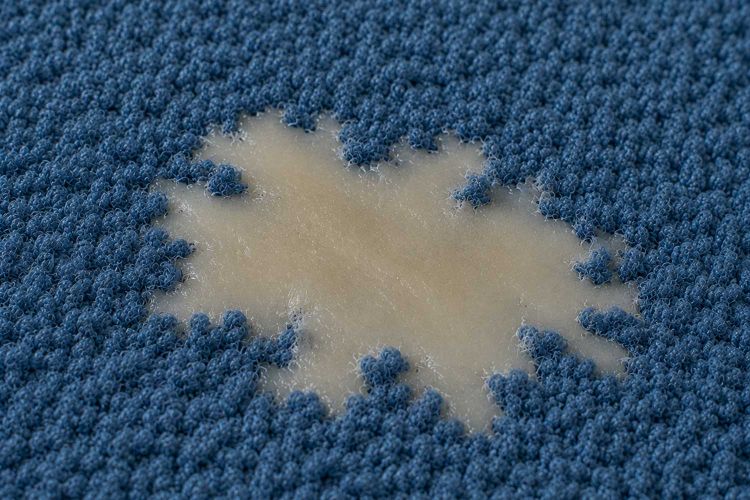
Candle wax spills can range from just a few drops on a carpet or sofa to a much larger accumulation caused by accidentally knocking over a candle.
Regardless of the amount, I always consider three important factors:
- The amount of wax: How much wax has accumulated on the fibers?
- The color of the wax: Is it plain white wax, or does it contain dyes that could leave behind a stain?
- The fiber type: What material has the wax landed on, and how sensitive is it to heat?
Start by Removing as Much Excess Wax as Possible
My first step is always to gently remove as much of the excess wax as possible.
In many situations, something as simple as using my fingernail works quite well. You can also use a spoon or another dull-edged object.
The important thing is to be extremely gentle. You want to remove the excess wax sitting on the surface of the fibers without scraping, cutting or damaging the fibers themselves.
This is particularly important when dealing with delicate carpeting or upholstery fabrics.
Consider the Color of the Candle Wax
Something homeowners often overlook is that not all candle wax is white or colorless. Many candles contain dyes that can leave behind color when the wax is removed.
If you attempt to remove a large accumulation of colored wax using heat before removing the excess, you may end up transferring some of that dye into the carpet or upholstery fibers.
That is why I prefer to remove the majority of the wax mechanically before proceeding with the remaining residue.
Once most of the wax has been removed, there is considerably less material to deal with. This helps reduce the potential for spreading the color.
Keep in mind that removing the wax and removing any dye left behind are two different challenges. Some dyes can permanently discolor certain fibers.
Using a White Cotton Cloth to Remove the Remaining Wax
Many cleaning companies recommend using a brown paper bag to absorb candle wax. Personally, I have always preferred using a clean, white cotton cloth.
I purchase cotton mill-end materials from T-shirt manufacturers. These are brand-new, unused cotton materials that I cut into cleaning cloths.
I prefer them because they are highly absorbent, allow me to see how much wax is being transferred, and provide a clean, professional approach.
Here is the procedure I have traditionally used:
- Place a clean, dry, white cotton cloth over the remaining wax.
- Using an iron with carefully controlled, low-to-medium heat, gently apply heat through the cloth.
- Keep the iron moving rather than allowing it to sit in one place.
- Work in very short intervals, checking the results frequently.
- Lift the cloth and inspect the carpet fibers to see how much wax has transferred.
As the wax softens, it should begin transferring from the fibers into the cotton cloth.
If some wax remains, replace the cloth with a clean section and repeat the process.
An important caution about heat: Different carpet and upholstery fibers have different tolerances for heat. Some synthetic fibers can melt or distort, while other materials can scorch or suffer permanent damage. Heat can also affect dyes, adhesives, carpet backing and upholstery construction.
Never allow the iron to touch the fibers directly. Do not assume a medium heat setting is appropriate for every material. Test carefully and stop immediately if you notice any change in the fibers. For delicate natural fibers, unknown materials or upholstery, professional treatment is the safer choice.
Remember, you can always repeat a careful removal process if a little wax remains. You cannot necessarily reverse damage caused by excessive heat.
What If the Carpet Fibers Have Been Scorched?
Occasionally, excessive heat can cause carpet fibers to become scorched or discolored.
In certain situations, a carpet repair professional may be able to carefully remove damaged surface fibers. However, this is not something I recommend homeowners attempt with a disposable razor. It is easy to cut healthy fibers and make the damage worse.
The best approach is to avoid excessive heat in the first place.
2. How to Remove Slime From Carpet and Upholstery Slime is another substance that can create quite a mess, particularly in households with children.
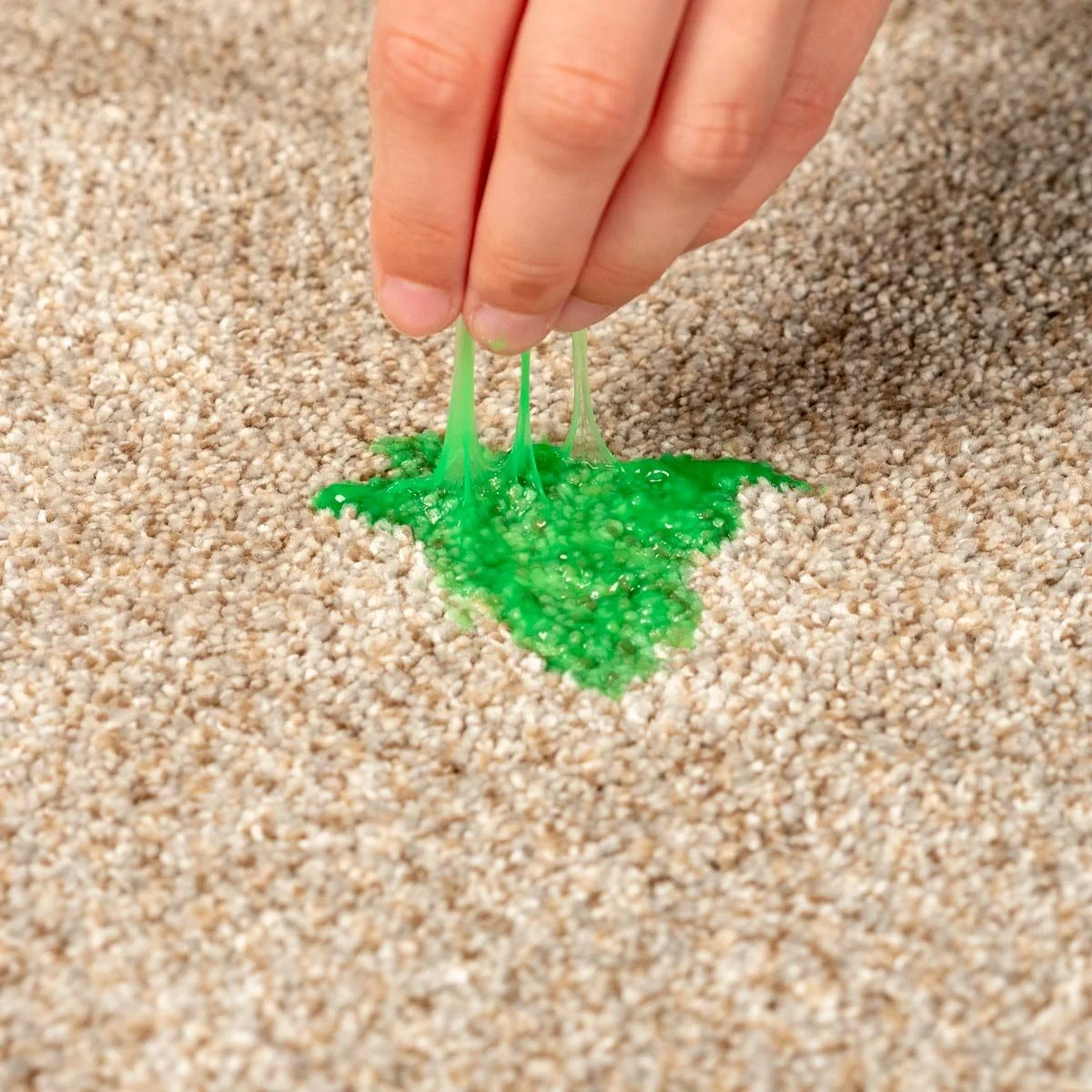
The approach I recommend depends largely on whether the slime is still fresh and soft or whether it has been sitting in the carpet long enough to become hard and crusty.
If the Slime Is Fresh and Still Soft
If you discover the slime shortly after it has been spilled, try to remove as much of it as possible before attempting any cleaning.
I would start by gently scraping away the excess slime. A spoon can work quite well.
The objective is to remove as much material as possible without pushing it deeper into the carpet fibers or spreading it over a larger area.
Once you have removed the majority of the slime, you can address the remaining residue.
One method I have used is a solution consisting of:
- 2 parts white vinegar
- 1 part hot water
Mix the solution in a small bowl. Dip a clean white cotton cloth or microfiber cloth into the mixture and wring it out so that it is damp rather than dripping wet.
Place the damp cloth over the remaining slime and allow it to sit for approximately 10 to 15 minutes.
The vinegar solution can help break down certain types of slime residue, making it easier to remove.
After allowing the solution some contact time, use the cloth to gently blot and absorb the remaining material.
Be sure to continually move to a clean section of the cloth. Don’t keep using the same dirty portion repeatedly, as you can simply transfer the slime and its color back onto the carpet.
If necessary, repeat the process.
What if some color remains?
Sometimes the slime itself can be removed, but a little of its color remains behind.
In that situation, I would first allow the area to dry completely. If residual color remains, a carefully tested application of isopropyl alcohol may help with certain dyes.
However, alcohol is not appropriate for every carpet or upholstery fiber, backing, dye or finish. Test in an inconspicuous area first, use very small amounts, and never pour alcohol directly onto the material. Avoid this approach on delicate or unidentified fabrics and seek professional assistance if uncertain.
What If the Slime Has Already Dried and Hardened?
This is a different situation.
If the slime has gone unnoticed and you discover it after it has already become hard, I would approach it differently.
One method is to place ice inside a sealed plastic bag and hold it against the dried slime. The objective is to chill the slime, making it harder and potentially more brittle.
Once it has become sufficiently brittle, carefully work at it with a dull object, such as a spoon, to break away small pieces.
Vacuum up the loosened material as you go.
Be careful not to dig into or cut the carpet fibers themselves.
Once you have removed as much of the hardened slime as possible, you can follow the same general cleaning procedure described above for fresh slime.
Depending on how much residue remains, you may need to allow the vinegar solution additional contact time.
Alec’s Advice on Slime
The biggest mistake people make is trying to remove slime by rubbing it into the carpet.
Always remove as much of the material as possible first. Whether it is fresh or dried, patience and careful removal are important.
And remember, removing the slime does not necessarily mean you have removed the dye that was used to color it.
3. How to Remove Ink From Carpet and Upholstery
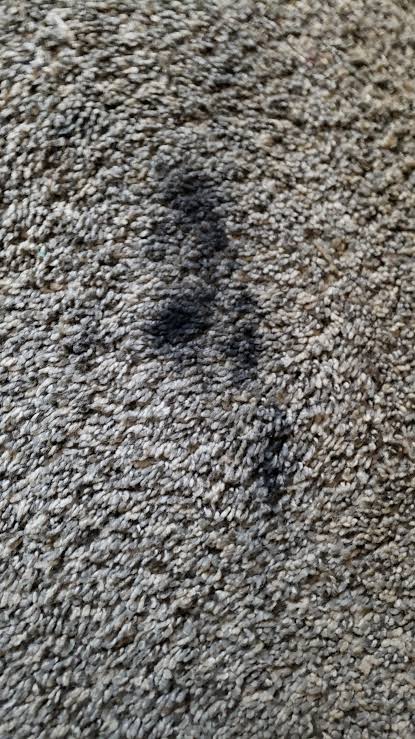
Ink is an entirely different animal when it comes to carpet and upholstery cleaning.
Unlike candle wax or slime, I strongly discourage homeowners from experimenting with household cleaning solutions when dealing with an ink stain.
Why?
Because there are many different types of ink, and they don’t all respond to the same cleaning methods.
Ballpoint pen ink, permanent markers, water-based inks and other specialty inks can have completely different chemical compositions. Some are much easier to remove than others.
Trying the wrong cleaning solution can cause the ink to spread, penetrate deeper into the fibers or create an even larger stain.
Why You Shouldn’t Experiment With Ink Removal
One of the first things I tell people who call me about an ink stain is not to start experimenting with different cleaning products.
You need the proper cleaning equipment and the appropriate cleaning agents for the particular type of ink and the material it has stained.
I have seen situations where someone initially had a relatively small ink stain but, after attempting to clean it themselves, ended up spreading the ink over a much larger area.
By then, the original problem may have become considerably more difficult to correct.
Is It a Small Ink Line or a Large Ink Blot?
There is another distinction I make when evaluating an ink stain: the actual shape and extent of the damage.
For example, if someone has accidentally drawn a line across the carpet with a ballpoint pen, the chances of successfully removing that ink can be quite good.
In my experience, a relatively clean ink line may have a very favorable chance of complete removal, depending on the ink, the fiber and whether anyone has already attempted to clean it.
However, consider a completely different situation.
A dog gets hold of a pen, chews on it, and the ink leaks out onto the carpet. Instead of a relatively narrow line, you now have a concentrated blot of ink that may have penetrated deeply into the fibers.
That is a much more difficult problem.
In some cases, the ink may be impossible to remove completely without damaging the carpet itself.
What If You Already Tried to Remove the Ink?
This is something I have encountered many times over the years.
When a customer calls me about an ink stain, one of the first questions I ask is whether they have already attempted to clean it themselves.
Unfortunately, if they have experimented with household cleaners or rubbed the area, the chances of successful removal can decrease substantially.
I have sometimes estimated that after an unsuccessful do-it-yourself cleaning attempt, the chances of complete removal may be as low as 5%.
That doesn’t mean every ink stain is permanent, but it does illustrate why I recommend leaving ink removal to a professional who has the appropriate equipment and cleaning solutions.
Alec’s Advice on Ink
If you discover ink on your carpet or upholstery, my recommendation is simple:
Don’t experiment. Don’t scrub. Don’t apply household cleaning products.
Take a photograph of the stain and contact a professional carpet and upholstery cleaner who has experience dealing with ink removal.
The sooner the stain is evaluated, the better your chances may be of achieving a successful result.
And remember, not all ink stains are created equal. A narrow line from a pen and a large concentrated ink blot can be two entirely different cleaning challenges.
4. Why the Type of Carpet or Upholstery Fiber Matters
There is one important consideration that applies to all three of these substances: the type of material you are trying to clean.
Not all carpet and upholstery fibers react the same way to cleaning solutions, moisture or heat.
For example:
- Nylon: Generally durable, but heat, dyes and aggressive cleaning chemicals can still cause problems.
- Polyester: Can be sensitive to certain solvents and excessive heat.
- Olefin (polypropylene): Has different chemical and heat characteristics than nylon and requires appropriate cleaning methods.
- Wool: A natural fiber that requires special care with moisture, temperature and cleaning chemistry.
- Viscose: Particularly delicate and susceptible to water-related damage, color bleeding and distortion.
- Cotton and other natural upholstery fabrics: Can be susceptible to shrinkage, watermarks and dye bleeding.
This is why I always emphasize identifying the fiber before attempting stain removal.
A cleaning method that works on one carpet may be completely inappropriate for another. The same is true with upholstery fabrics.
5. When Should You Call a Professional Carpet Cleaner?
My advice is to recognize when a household cleaning attempt is reasonable and when it is better to leave the problem to someone with the appropriate equipment and experience.
Candle wax and fresh slime may be manageable in some circumstances, provided you know what material you are dealing with and use an appropriate approach.
Ink, however, is something I would generally leave to a professional from the beginning.
If you have a large spill, an unidentified fiber, a delicate area rug, expensive upholstery or a stain that is not responding to careful treatment, don’t keep experimenting.
Sometimes the best way to save a carpet or piece of furniture is to know when to stop.
Final Thoughts From Alec
After 56 years in the carpet and upholstery cleaning business, I have learned that removing a stain is not always as simple as applying a cleaning solution and wiping it away.
The substance involved, the amount present, the type of fiber and the cleaning methods previously attempted all play an important role in determining the outcome.
My biggest piece of advice is this: Don’t make a small problem bigger by trying too many different cleaning methods.
If you are unsure how to handle a particular stain, getting professional advice before attempting to remove it can save you considerable time, frustration and potentially expensive damage.
Need Professional Help With Carpet or Upholstery Stains?
Some stains can be difficult to remove without the proper cleaning equipment, products and experience. If you’re dealing with stubborn stains, delicate fabrics or a cleaning problem you’re not comfortable tackling yourself, professional help may be the best solution.
Alec’s Carpet & Upholstery Cleaning LLC has been providing professional cleaning services since 1970, serving the South Shore, Greater Boston and Cape Cod.
Learn more about our services:
Have a question about carpet or upholstery care? Visit our [Ask Alec series] (https://alecscarpetcleaning.com/ask-alec/) for more practical advice from 56 years of experience.
About Alec
Alec Houle is the owner of Alec’s Carpet & Upholstery Cleaning LLC, an independently operated cleaning business established in 1970. With 56 years of hands-on experience, Alec shares practical advice about carpet cleaning, upholstery care, area rugs and fabric protection through his Ask Alec series.