



Professional Upholstery Cleaning for Fine Fabrics, Designer Furniture & Everyday Upholstery
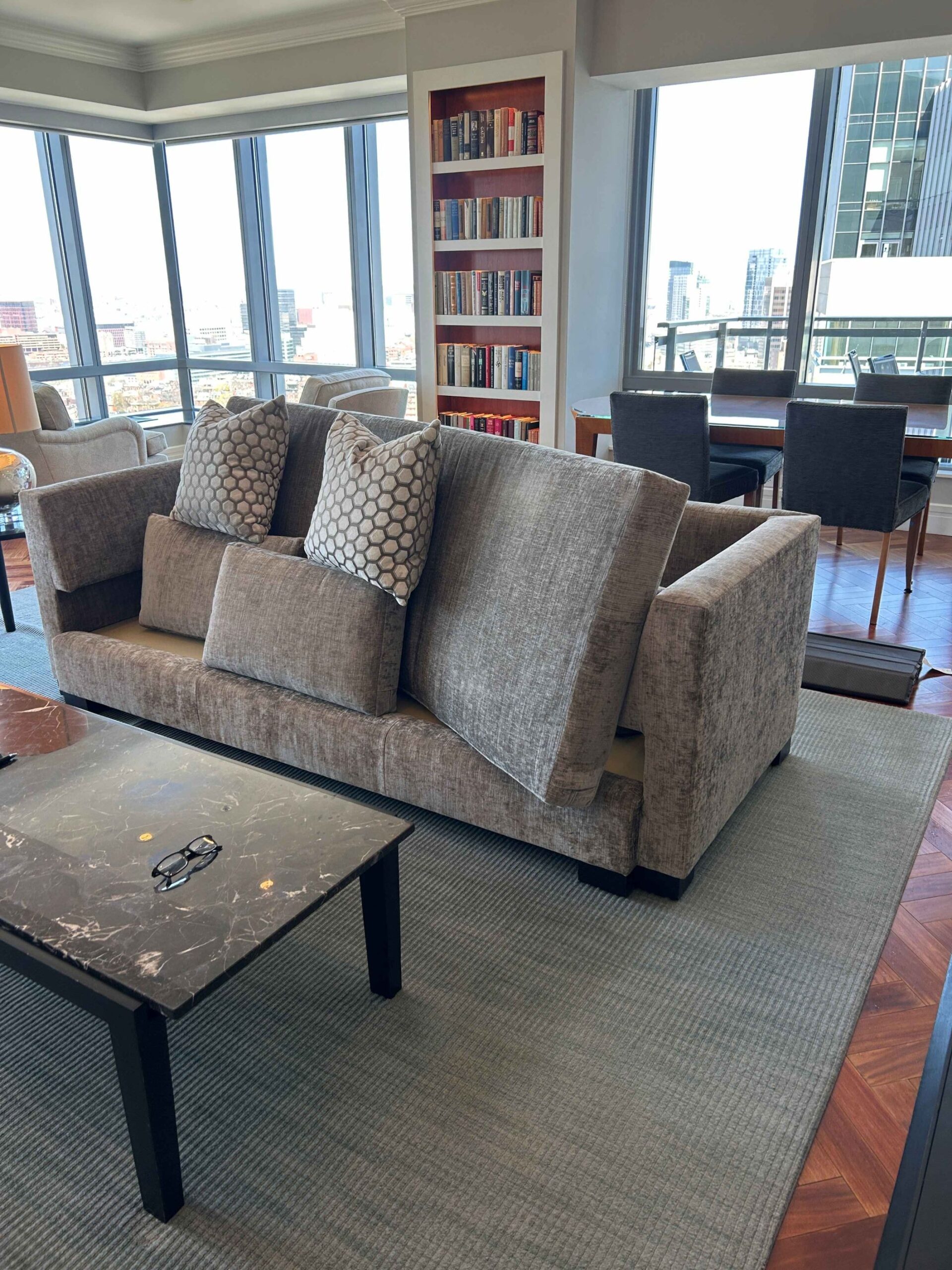
Professional upholstery cleaning of upholstered furniture in a Brookline home.
Upholstered furniture is often among the most frequently used—and most valuable—furnishings in a Brookline home. Sofas, sectionals, dining chairs, recliners, accent chairs, ottomans, and designer furniture are exposed to body oils, dust, food, pets, spills, and everyday use every day.
Over time, that soil can become embedded in the fabric long before the furniture actually looks dirty.
After more than 56 years in the carpet and upholstery cleaning business, I understand that every fabric and every piece of furniture is different.
I began cleaning carpets and upholstery in 1962, and Alec’s Carpet & Upholstery Cleaning has been serving homeowners throughout Greater Boston since 1970.
For homeowners throughout Brookline—including Chestnut Hill, Fisher Hill, Coolidge Corner, Brookline Village, Washington Square, Cottage Farm, Longwood, Pill Hill, Aspinwall Hill, and surrounding neighborhoods—I provide careful, professional upholstery cleaning based on the individual fabric, construction, condition, and use of each piece.
Upholstery in Brookline Homes Can Have Very Different Needs
Brookline homes contain a wide variety of furniture and interiors.
Some homes have older furniture that has been part of the family for many years. Others have newer homes and condominiums with designer furniture, custom upholstery, and modern performance fabrics.
The furniture itself can present very different cleaning challenges.
A heavily used family-room sofa is not necessarily treated the same way as a formal chair upholstered in linen or velvet. Dining chairs can develop concentrated food and body-oil soil, while the arms and headrests of a favorite chair can accumulate years of use.
I don’t believe every piece of upholstery should be cleaned with the same procedure.
The fabric and the condition of the furniture should help determine the cleaning method.
The Fabric Comes First
One of the most important things I’ve learned in more than 56 years of cleaning is that the fabric itself needs to be understood before cleaning begins.
Upholstery can be made from cotton, linen, wool, velvet, chenille, microfiber, rayon blends, performance fabrics, and many other materials.
Different fabrics can respond very differently to cleaning solutions and moisture.
Before cleaning, I carefully consider:
- Fiber content
- Fabric construction
- Color and dye stability
- Overall condition
- Level and type of soiling
- Areas of wear
- Previous cleaning history
- Spots and stains
- How the furniture is used
- How much moisture the fabric can safely tolerate
Using the wrong cleaning method—or simply using too much moisture—can sometimes contribute to problems such as browning, shrinkage, color bleeding, water marks, texture changes, or damage to delicate fibers.
Knowing what not to do can be just as important as knowing what to do.
Can You Trust the Cleaning Code on Your Upholstery?
You may find a small tag underneath a sofa or chair cushion with a letter such as W, S, SW or X.
These codes can provide useful information, but they are only one part of determining how a piece should be cleaned.
The actual fabric, construction, dyes, condition, previous cleaning history, and moisture sensitivity still need to be considered.
I’ve written more about this in Ask Alec: Can You Trust the Cleaning Codes on Your Upholstery?.
The cleaning code is useful information—but it doesn’t tell the entire story.
How I Approach Upholstery Cleaning
Every piece of furniture is different, but my cleaning process generally starts with evaluation rather than simply applying a cleaning solution.
Inspection and Fabric Evaluation
I examine the fabric, construction, condition, visible soil, spots, stains, areas of wear, and anything else that could affect the cleaning process.
I also look for signs of previous cleaning problems, excessive wear, dye instability, or moisture sensitivity.
Dry Soil Removal
When appropriate, I remove loose dry soil before introducing moisture.
This can be especially important on frequently used furniture where fine particles have accumulated deep within the fabric.
Special Attention to High-Use Areas
Arms, headrests, seat cushions, and other frequently touched areas often require additional attention because this is where body oils and everyday soil tend to accumulate.
Spots and stains are evaluated individually rather than treated with one universal stain-removal formula.
Professional Cleaning
The cleaning method is selected specifically for the fabric and condition of the furniture.
Some upholstery can tolerate a more thorough wet-cleaning process, while other fabrics may require a carefully controlled lower-moisture approach.
More aggressive isn’t necessarily better.
My goal is to clean the furniture as thoroughly and safely as the particular fabric will allow.
Why Moisture Control Matters
One of the biggest misconceptions about upholstery cleaning is that more water means better cleaning.
It doesn’t.
The amount of moisture appropriate for a sofa or chair depends on the fabric, construction, condition, and cleaning method.
Too much moisture can contribute to problems such as water marks, browning, dye movement, slow drying, shrinkage, or other changes with certain fabrics.
I’ve written about one of these problems in Ask Alec: Why Did Cleaning Leave Water Marks or Rings on My Upholstery?.
Controlled Drying
After cleaning, the furniture needs to dry properly.
I use appropriate extraction and drying techniques to remove as much moisture as practical and help the fabric dry in a controlled manner.
Proper drying is an important part of the cleaning process because moisture that remains in the fabric longer than necessary can contribute to water marks, browning, or other changes in appearance.
Upholstered Furniture I Commonly Clean
Over the years, I have professionally cleaned many types of upholstered furniture, including:
- Sofas
- Sectionals
- Love seats
- Recliners
- Armchairs
- Accent chairs
- Dining room chairs
- Ottomans
- Benches
- Upholstered office furniture
- Custom-made furniture
- Designer furniture
Whether you’re dealing with one favorite chair or an entire room of furniture, each piece deserves individual attention.
Common Upholstery Problems I Help Address
Brookline homeowners contact me about many different upholstery concerns, including:
- Body oils and soil on arms and headrests
- Food and beverage spills
- Pet hair and pet-related soiling
- Children’s spills and everyday marks
- General soil buildup
- Dingy or dull-looking fabric
- Dust and fine particles within upholstery
- Everyday spots and stains
- Water marks and rings
- Furniture that has been cleaned previously
Every upholstery problem has a story.
A dark area on an arm, a water ring, a stain that won’t disappear, or a fabric that has changed texture can have very different causes.
Sometimes the visible mark is only part of the problem.
I’ve written more about this in Ask Alec: Every Upholstery Problem Has a Story.
Before cleaning begins, I inspect the furniture and discuss realistic expectations so you understand what I believe can be improved.
Fine Furniture Deserves Careful Cleaning
Some upholstered furniture is relatively easy to replace.
Some isn’t.
A custom sofa, designer chair, antique piece, or favorite family chair may have a fabric or construction that cannot simply be replaced if something goes wrong.
That’s one reason I believe upholstery cleaning should begin with understanding the furniture and choosing the cleaning method second.
I’ve also written about safely cleaning fabric furniture in Ask Alec: How to Clean a Fabric Sofa Without Ruining Your Upholstery.
From Alec’s Experience: Don’t Wait Until Your Furniture Looks Dirty
One thing I’ve learned over the years is that many homeowners wait until their furniture actually looks dirty before scheduling professional cleaning.
By the time visible soil appears, the fabric may already contain a significant amount of body oils, fine soil, and other contamination that isn’t immediately obvious.
Most upholstery gradually collects body oils, dust, and fine abrasive particles long before visible soil becomes obvious.
Every time someone sits on the furniture, handles the arms, or rests against the cushions, more soil can gradually accumulate.
Regular vacuuming is helpful, but it cannot remove everything that becomes embedded within the fabric.
Professional cleaning can help remove accumulated soil before it becomes a more serious problem.
I’ve always believed that preventive maintenance is far less expensive than replacing quality furniture years before you should have to.
Why Brookline Homeowners Choose Alec’s
After more than 56 years in the cleaning business, I still believe experience, careful evaluation, and honest recommendations make a real difference.
When you choose Alec’s Carpet & Upholstery Cleaning, you receive:
- More than 56 years of hands-on professional cleaning experience
- Owner involvement and personal attention
- Careful evaluation of each piece before cleaning
- Experience with fine and specialty fabrics
- Cleaning methods selected for the individual fabric
- My background in chemistry and understanding of cleaning solutions
- Honest recommendations without high-pressure sales
- Careful attention to detail
- Respect for your home and furnishings
My goal has never been simply to clean as many pieces of furniture as possible in a day.
My goal is to clean each piece properly.
Professional Upholstery Cleaning Throughout Brookline
I provide professional upholstery cleaning throughout Brookline, including:
- Chestnut Hill
- Fisher Hill
- Coolidge Corner
- Brookline Village
- Washington Square
- Cottage Farm
- Longwood
- Pill Hill
- Aspinwall Hill
- And surrounding Brookline neighborhoods
Whether you need one favorite chair cleaned, a family-room sectional refreshed, dining chairs professionally cleaned, or upholstery throughout your home cleaned, I’d be happy to help.
Have Questions About Upholstery Care? Ask Alec
Over the years, I’ve answered many questions about upholstery cleaning, cleaning codes, moisture, stains, water marks, fabric protection, and how to safely care for upholstered furniture.
On my Ask Alec page, I share practical advice and real-world experiences based on more than 56 years in the cleaning business.
Some related articles include:
- How Often Should Upholstery Be Professionally Cleaned?
- Can You Trust the Cleaning Codes on Your Upholstery?
- How to Clean a Fabric Sofa Without Ruining Your Upholstery
- Why Does My Sofa Have Dark Spots on the Arms and Headrest?
- Every Upholstery Problem Has a Story
- What Should You Do When You Spill Red Wine on Carpet, Rugs or Upholstery?
My goal isn’t simply to sell a cleaning service. It’s to help homeowners better understand their furniture, make informed decisions, and avoid mistakes that can sometimes be costly.
Other Professional Cleaning Services in Brookline, MA
In addition to professional upholstery cleaning, Alec’s Carpet & Upholstery Cleaning also provides:
- Professional Carpet Cleaning in Brookline, MA
- Professional Area Rug Cleaning in Brookline, MA
- Professional Outdoor Cushion Cleaning in Brookline, MA
Each service requires a different approach. Whether you need carpeting professionally cleaned, a valuable area rug cleaned in our specialized facility, outdoor cushions professionally cleaned, or upholstered furniture carefully cleaned in your home, I’d be happy to discuss the best approach for your particular needs.
Ready to Discuss Upholstery Cleaning in Brookline?
If your upholstered furniture has lost its freshness, accumulated everyday soil, has spots or stains that concern you, or simply deserves professional attention, I’d be happy to talk with you.
After more than 56 years in the business, I still believe the best approach is to carefully evaluate each piece, answer your questions honestly, and recommend the cleaning process that makes the most sense for that particular fabric.
Call Alec’s Carpet & Upholstery Cleaning today at 781-871-1415 to discuss your upholstery cleaning needs or request an estimate.
I’ll be happy to answer your questions and help you determine the best approach for cleaning and caring for your upholstered furniture.