


Today, many homes have moved away from wall-to-wall carpeting and now use a variety of hard-surface flooring, including hardwood, engineered wood, tile and luxury vinyl plank flooring.
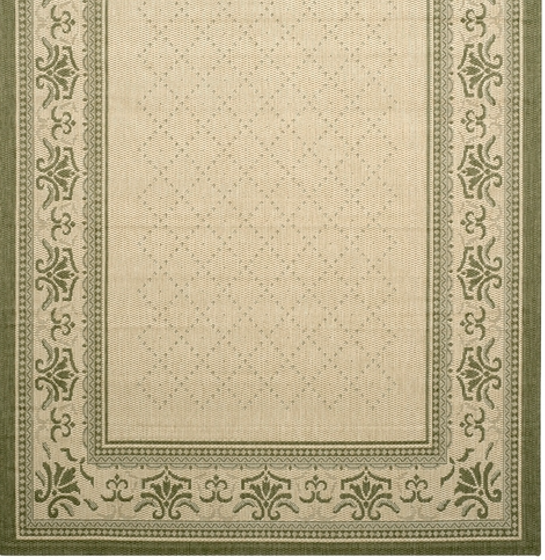
Area rugs have become an important part of these homes. They can add color and decoration, make a room more comfortable, help define a living space and even provide acoustic benefits by reducing the amount of sound that bounces off hard surfaces.
But there is something many homeowners don’t realize:
Not every area rug can be cleaned the same way.
In fact, the best cleaning method can vary considerably depending on the type of rug, the fibers used to make it, how the rug was constructed and its overall condition.
And while many area rugs can be safely cleaned right in the home, there are others that are better cleaned at a professional rug-cleaning facility.
So, Why Can’t Every Area Rug Be Cleaned in the Home?
This is a question I hear quite often.
The answer is that an area rug isn’t simply a smaller version of wall-to-wall carpet.
Two rugs can look very similar on the surface but be completely different underneath. One may be made with a fiber and construction that responds very well to in-home cleaning, while another may contain delicate fibers, unstable dyes, a backing or a construction that makes traditional in-home cleaning inappropriate.
This is why I believe it is important to have the rug evaluated before deciding how it should be cleaned.
If you are dealing with a company that has the ability to clean area rugs both in the home and at a professional cleaning facility, they can evaluate the rug and recommend the method that is most appropriate for that particular rug.
That is important because the goal shouldn’t be to automatically send every rug away for cleaning.
The goal should be to use the safest and most effective cleaning method for the rug you actually have.
What Determines How an Area Rug Should Be Cleaned?
There are several things I look at when determining how an area rug should be cleaned.
The Fiber
What is the rug made from?
It could contain wool, cotton, silk, nylon, polyester, polypropylene, viscose or a combination of different fibers.
Each fiber can react differently to moisture, cleaning solutions, agitation and drying.
I’ve written more about this in my Ask Alec article, “The Hidden Risks of Cleaning Wool, Silk and Other Natural-Fiber Carpets”.
The important thing to remember is that two rugs can look similar while reacting very differently to the same cleaning procedure.
The Construction
How was the rug actually made?
A hand-knotted rug, hand-tufted rug and machine-made rug may look similar to the average homeowner, but they can behave very differently when they are cleaned.
The construction of the rug can be just as important as the fiber itself.
A rug isn’t simply a piece of fabric sitting on the floor. It is a constructed textile made up of fibers, dyes and a foundation, and all of those components need to be considered.
The Dyes
Are the colors stable?
Some rugs contain dyes that can bleed or migrate when exposed to moisture. Before cleaning, dyes should be tested to determine how they are likely to react.
In some situations, special precautions or treatments may be necessary before the cleaning process begins.
I’ve also written about why some Oriental and hand-knotted rugs are dusted before washing in “Ask Alec: Why Hand-Knotted and Oriental Rugs Are Sometimes Dusted Before Washing”.
It is another good example of why there isn’t one cleaning procedure that is appropriate for every rug.
The Condition of the Rug
Age and condition matter as well.
A rug that appears perfectly fine on the surface may have weakened fibers, a deteriorating foundation, previous water damage or other problems that aren’t immediately obvious.
And then there are situations where what happened to the rug can change the recommended cleaning method.
Pet urine is a good example.
Pet Urine Can Change the Cleaning Process
Almost every pet owner knows that accidents happen.
Sometimes it is simply an occasional accident because the owner didn’t get the dog outside in time.
And with some smaller breeds, accidents can become a much more frustrating and recurring problem.
When urine gets into an area rug repeatedly, it can create a very unpleasant environment inside the home.
The odor can become particularly noticeable during hot and humid weather.
When a rug has only a minor, isolated spot, it may be possible to address it with an appropriate in-home cleaning procedure.
But when a rug has numerous pet urine stains, the situation can be very different.
In those circumstances, simply cleaning the surface of the rug may not be enough.
Sometimes the rug needs to be removed from the home and thoroughly rinsed and cleaned at a professional rug-cleaning facility.
Why Immersion Can Be Important for Heavily Urine-Contaminated Rugs
One advantage of a properly equipped rug-cleaning facility is the ability to use a much more thorough cleaning and rinsing process when the rug and its construction allow it.
For certain rugs, this can involve immersing the rug in water and thoroughly flushing contaminants from the fibers and foundation.
The objective is not simply to make the surface look clean.
It is to remove as much of the urine contamination as possible from the rug.
However, not every rug can safely be immersed.
And this is where knowing the construction of the rug becomes extremely important.
Hand-Knotted Rugs and Machine-Made Oriental-Style Rugs
Many hand-knotted rugs can tolerate a thorough wet-cleaning process very well when they have been properly evaluated and the dyes are stable.
Many machine-made Oriental-style rugs can also tolerate this type of cleaning.
But that doesn’t mean every rug that looks like an Oriental rug should automatically be put into a bath.
The dyes still need to be tested, and the construction and condition of the individual rug need to be considered.
A professional rug cleaner should know what to look for before deciding how the rug should be cleaned.
Tufted Wool Rugs Can Be a Different Story
One type of rug that can create problems is the hand-tufted wool rug.
Some tufted rugs have a backing that may contain latex, cotton or a combination of materials.
That backing can behave very differently from the foundation of a hand-knotted rug.
Putting the wrong tufted rug through an aggressive wet-cleaning process can create problems with the backing, adhesive or overall structure of the rug.
This is one of the reasons why identifying the rug’s construction before cleaning is so important.
A rug can be made from perfectly good wool and still require a completely different cleaning approach because of the way it was constructed.
Viscose Rugs Are Another Special Situation
Then we have viscose.
Viscose is a manufactured cellulosic fiber made from regenerated cellulose. It has been used in many area rugs because it can provide a soft feel and a beautiful appearance.
Unfortunately, viscose rugs can present some very serious challenges for professional rug cleaners.
The fiber can be extremely sensitive to moisture and mechanical action. Problems such as texture changes, distortion, browning, color changes and other damage can occur when these rugs are improperly cleaned.
For this reason, many experienced rug-cleaning professionals are extremely cautious when dealing with viscose.
Personally, there are viscose rugs that I would simply refuse to clean rather than take the risk of damaging someone’s rug.
Sometimes the most professional answer is not to clean a rug when the risk is greater than the potential benefit.
Some Rugs Need to Be Blocked After Cleaning
Another reason some area rugs need to go to a professional cleaning facility is because cleaning isn’t always the end of the process.
Some rugs need to be blocked after cleaning.
Blocking is the process of carefully returning a rug to its proper shape as it dries.
This can be particularly important with certain needlepoint rugs and rugs with borders or accent strips around the perimeter.
These rugs can have a tendency to change shape or become distorted during the cleaning and drying process.
I’ve written more about this problem in “Ask Alec: Why Is My Area Rug Waving or Buckling After Cleaning?”.
Without proper blocking, a rug may dry with waves, buckling or an uneven shape.
A properly equipped rug-cleaning facility gives the cleaner the space and equipment necessary to address these problems.
What About Rugs That Can Be Cleaned in the Home?
This is important:
Not every area rug needs to be taken away for cleaning.
There are many rugs that can be safely and effectively cleaned right in the customer’s home.
In fact, if the rug is appropriate for in-home cleaning, there may be no reason to send it to a rug-cleaning plant.
The important thing is having someone who understands the difference.
I’ve actually written about this question before in Ask Alec: “Should You Clean Your Area Rugs at Home or Send Them Out?”.
My position hasn’t changed.
I don’t believe every area rug automatically needs to go to a cleaning plant.
I’ve cleaned thousands of rugs in people’s homes over the years, and I’ve also taken thousands of rugs back to our facility because they really did need that level of cleaning.
The decision should be based on the individual rug.
What Does a Professional Rug-Cleaning Facility Offer?
There are some things that simply become easier to accomplish when a rug is brought to a properly equipped cleaning facility.
For example, we may be able to:
- Thoroughly flush the rug when its construction permits it
- Address significant pet contamination
- Control the drying environment
- Monitor the rug while it dries
- Address wick-back if it occurs
- Block rugs that require reshaping
- Perform additional cleaning or treatment if necessary
- Inspect the rug again after it is completely dry
Proper drying is particularly important.
A rug that is wet doesn’t tell the whole story. Problems such as distortion, browning, odor or dye migration may become apparent during the drying process.
Having the rug at a facility allows the cleaner to monitor that process rather than simply leaving the rug behind after an in-home cleaning.
You can see more about what we do in our “Professional In-Plant Area Rug Cleaning” service.
My Advice: Let the Rug Determine the Cleaning Method
Over the years, I’ve learned that there is no single cleaning method that is right for every area rug.
A rug may look like it should be easy to clean, but its construction may tell a completely different story.
Another rug may look delicate but actually be quite durable.
Pet urine, unstable dyes, delicate fibers, backing materials, shrinkage, distortion and the need for blocking can all change the recommended cleaning procedure.
So if you have an area rug that needs cleaning, my advice is simple:
Don’t assume that because it is an area rug, it should automatically be cleaned in your home. And don’t assume that every area rug needs to be sent away either.
Have the rug evaluated by a company that has experience with both in-home area rug cleaning and professional rug cleaning at its facility.
That way, the rug can be cleaned using the method that is appropriate for its particular fiber, construction and condition.
After all, when you’re dealing with a valuable, delicate or sentimental rug, the most important part of cleaning isn’t simply getting it clean.
It’s getting it clean without damaging it.
Have a Question for Alec?
I’ve been cleaning carpet, upholstery and area rugs since 1970, and over the years I’ve learned that sometimes the best answer is simply to explain what can go wrong before it does.
If you have a question about cleaning your carpet, upholstery or area rug, Ask Alec.
Alec Houle
Alec’s Carpet & Upholstery Cleaning LLC
Serving Greater Boston, the South Shore and Cape Cod since 1970.
56 years of real-world cleaning experience.
If your area rug needs professional attention, learn more about our Professional Area Rug Cleaning services or contact us to have your rug evaluated.
781-871-1415