



How can my outdoor cushions get so dirty when hardly anyone ever uses them?
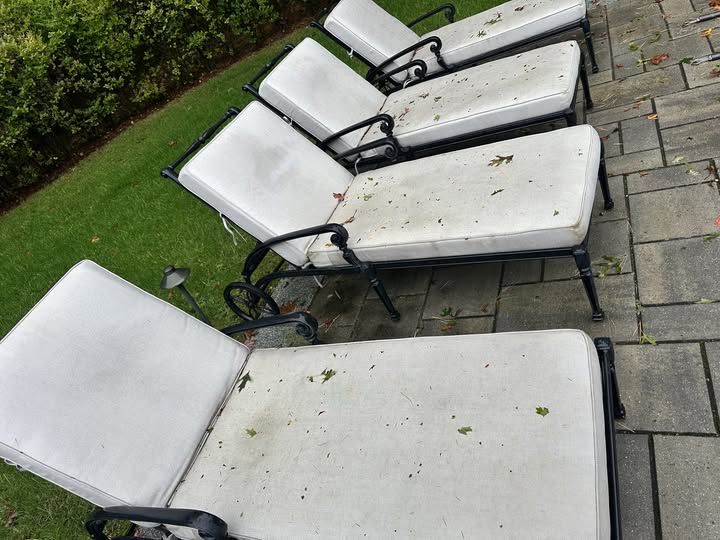
It’s a question homeowners might ask when they uncover their patio furniture and discover that their cushions are dirty, stained, or even developing mildew.
The answer is simple. Using your outdoor cushions isn’t the only thing that makes them dirty. In fact, some of the biggest contributors to outdoor cushion soiling have absolutely nothing to do with someone sitting on them.
After cleaning thousands of outdoor cushions every year, I’ve seen firsthand just how much the outdoor environment can affect these fabrics.
When You Actually Use Your Outdoor Cushions
Think about where outdoor cushions are typically used. Perhaps they’re on your back deck, patio, or around your swimming pool.
People often sit outside to enjoy the sunshine. They may apply sunscreen, suntan lotion, or other skin creams before relaxing. While these products serve a purpose, some of their ingredients can transfer onto the fabric.
These residues can attract and hold onto airborne dust, pollen, and other contaminants, causing the cushions to become soiled more quickly than you might expect.
Even When Nobody Uses Them, Outdoor Cushions Are Exposed
Now let’s consider what happens when nobody is using the furniture.
Pollen is one of the biggest contributors to outdoor cushion soiling. It can easily settle on and adhere to outdoor fabrics, regardless of whether they’re made from Sunbrella or another type of outdoor material.
And let’s not forget our feathered friends!
A bird flying overhead or sitting on the back of a chair might decide your cushion is a convenient place to leave a little reminder that it was there. This can be particularly noticeable after birds have been eating berries, which can leave behind some rather stubborn stains.
Then there’s tree sap from nearby trees, along with airborne dirt, dust, and other environmental contaminants.
All these things contribute to the gradual buildup of soil and staining on outdoor fabrics.
How Does This Lead to Mildew and Mold?
Here’s where things get interesting.
As these various contaminants accumulate on the fabric, they can help retain moisture from rain, humidity, and morning dew.
When these materials remain damp for extended periods, particularly in warm and humid conditions, they can create an environment favorable to mildew and mold growth.
This is one reason outdoor cushions can develop that familiar musty smell, even when they haven’t been used very much.
Doesn’t Covering Your Outdoor Cushions Prevent This?
Covering your outdoor furniture is certainly better than leaving it completely exposed to the elements. It can substantially reduce exposure to rain, sunlight, airborne debris, and other contaminants.
However, covering your cushions doesn’t necessarily eliminate the problem.
For example, pollen and dust can settle on the cushions before you put the covers on. Once covered, moisture from morning dew or humidity can become trapped beneath the furniture covers, slowing the drying process.
If the cushions remain damp long enough, mildew and mold can develop.
So while furniture covers are helpful, they aren’t a substitute for keeping your cushions clean and properly dried.
What Do I Do With My Own Outdoor Cushions?
Since I clean thousands of outdoor cushions every year, I tend to take a little different approach with my own.
My cushions are stored indoors, away from the outdoor elements, until I’m ready to use them. Whether I’ve used them during the day or evening, once I’m finished, I bring them back inside.
Why?
Because I know firsthand what happens when outdoor cushions are continually exposed to the elements. Once mildew and mold develop, cushions can develop an unpleasant, musty odor.
And honestly, who wants to sit on cushions that smell musty or moldy? I certainly don’t!
The more you do to limit their exposure to outdoor contaminants and moisture, the better your cushions are likely to look and smell.
What Should You Do at the End of the Season?
Even with the best care, you simply cannot prevent all outdoor exposure. Eventually, your cushions will accumulate some combination of dirt, pollen, sunscreen residues, tree sap, and other contaminants.
That’s why I recommend having your outdoor cushions professionally cleaned at the end of each season, before putting them away for the winter.
I would also caution against simply throwing them into a basement, garage, or shed and forgetting about them until next spring.
Unless the storage area is clean and dry, lingering moisture can contribute to continued mildew and mold growth. In some circumstances, this can also affect other items stored nearby.
My recommendation is to have your outdoor cushions professionally cleaned and properly dried before storing them for the off-season.
At Alec’s Carpet & Upholstery Cleaning, we provide professional in-plant outdoor cushion cleaning at our Abington, Massachusetts facility. We can also arrange pickup, delivery, protective wrapping, and optional climate-controlled winter storage.
After all, outdoor cushions are an investment. A little preventive care and proper cleaning can go a long way toward keeping them looking and smelling their best for years to come.
That’s my advice after 56 years in the cleaning business.
— Alec
Have another question about caring for your outdoor cushions, carpets, or upholstery? Visit my Ask Alec advice center for practical answers based on more than five decades of hands-on cleaning experience.